Modern Mediterranean Interior Design: Reimagining the Florida Villa
How to bring a Florida Mediterranean villa, from Mizner's Palm Beach to Coral Gables, into a modern interior without losing its character.
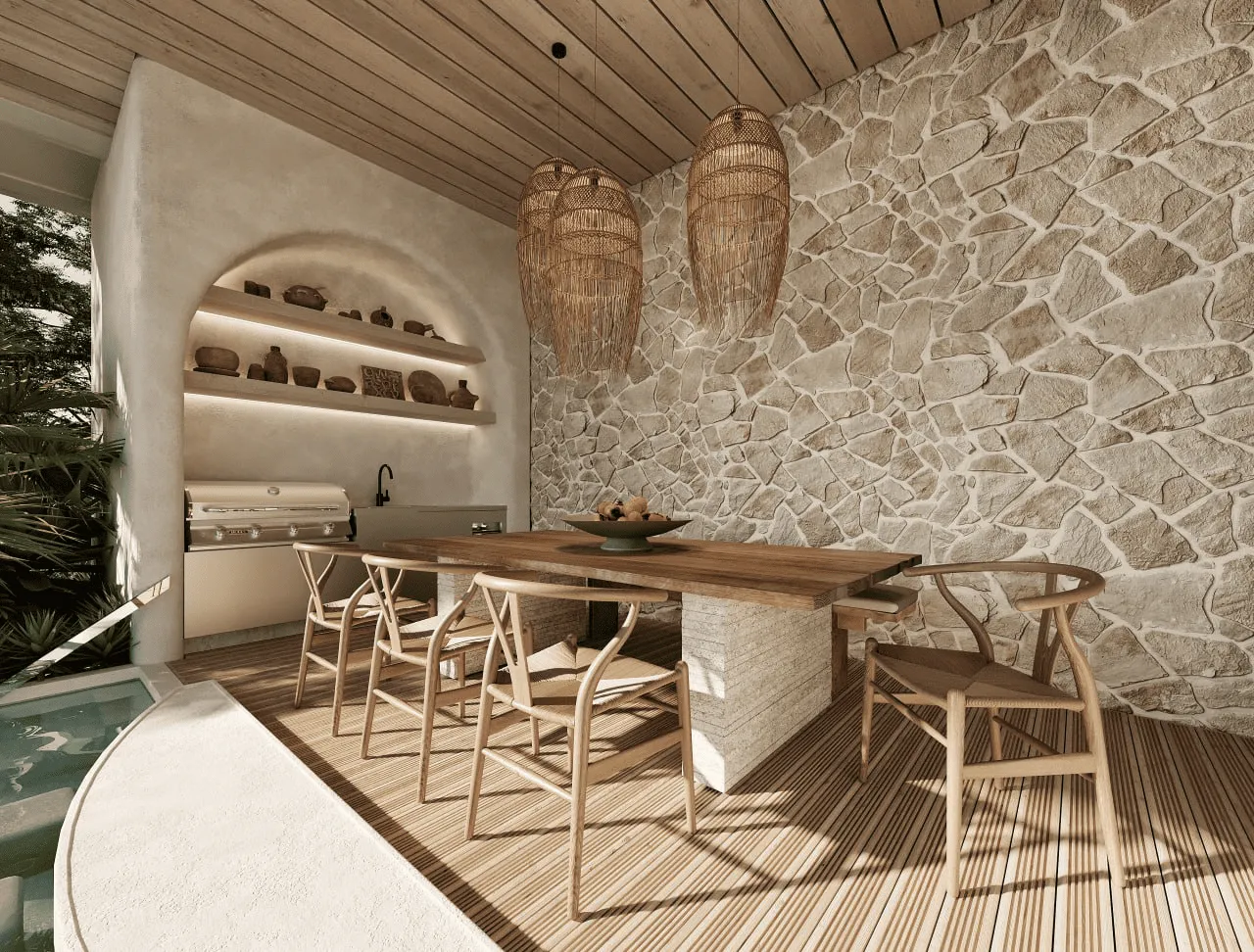
Modern Mediterranean interior design keeps the plaster, stone, terracotta and timber of houses around the Mediterranean and strips away everything that turns them into a theme: the faux-aged paint, the heavy drapery, the shutters painted blue for effect. In South Florida the style has its own history. A century ago Addison Mizner in Palm Beach and George Merrick in Coral Gables built whole neighborhoods in a Mediterranean Revival style, and many of those villas are still lived in. Below is how I bring such a house, or a new one in its spirit, into the present.
What modern Mediterranean is
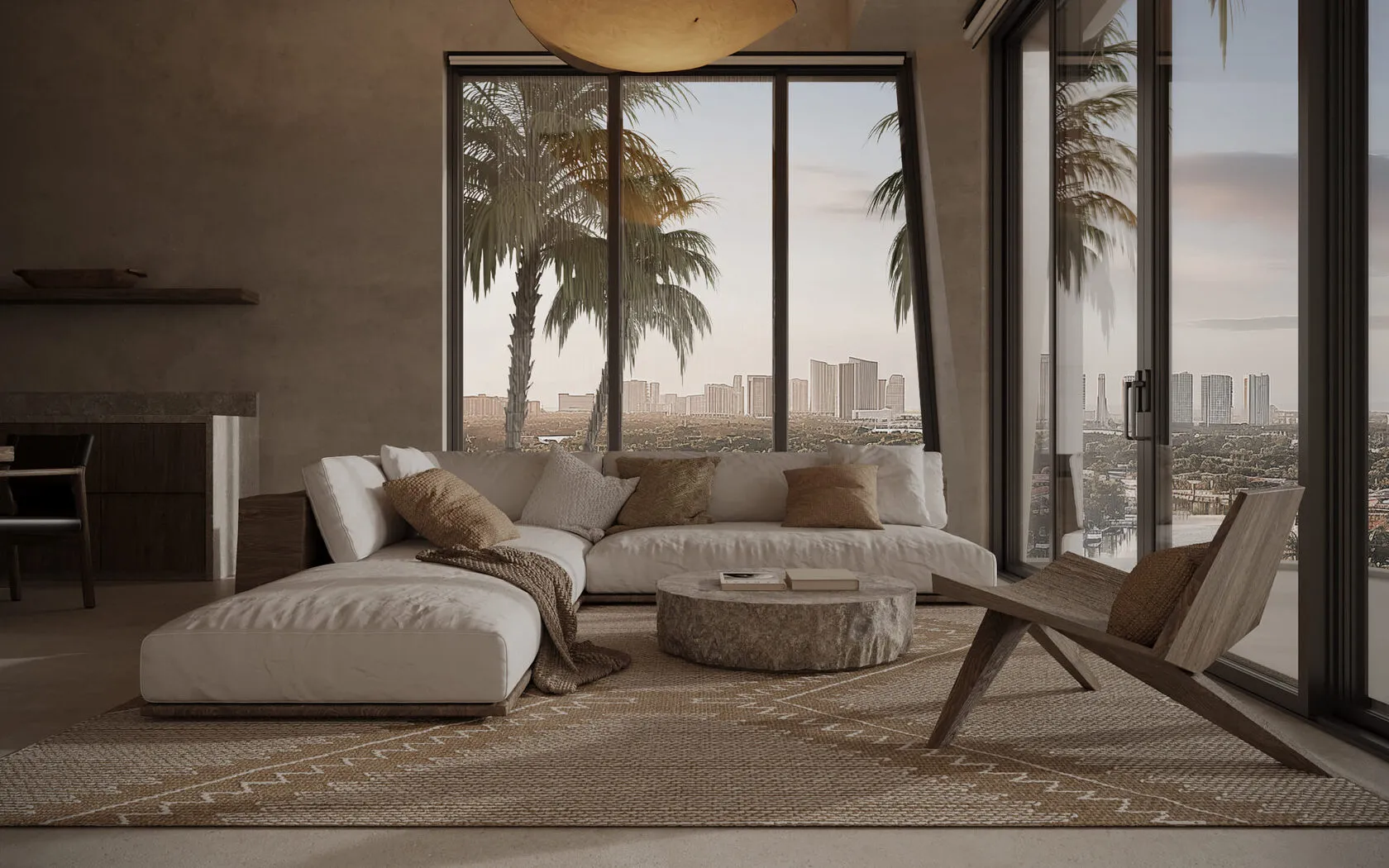
Modern Mediterranean is a way of living in a warm climate that architecture around the Mediterranean Sea worked out over centuries: thick walls, small openings to the sun and large ones to the shade, rooms that open onto courtyards, and surfaces made from the earth nearby. The modern version keeps that logic and simplifies the ornament.
In practice it comes down to a handful of traits:
- walls of lime plaster or stucco, with visible hand movement;
- arched openings and niches instead of plain rectangular doorways;
- terracotta, stone and wood underfoot, often unpolished;
- exposed or limewashed ceiling beams;
- iron in thin, dark lines rather than scrolls;
- furniture that is simple and solid, with linen and rattan rather than brocade;
- a strong relationship between inside and outside, through a loggia, a patio or a courtyard.
It sits between two neighbors. Next to the classic Tuscan or Spanish villa it is lighter and emptier. Next to organic modern, which we describe in a separate article on organic modern for the Florida coast, it is more architectural, heavier in hand and openly connected to its history.
Materials: plaster, stone, terracotta, wood
The style is mostly material. If the materials are right, very little decoration is needed.
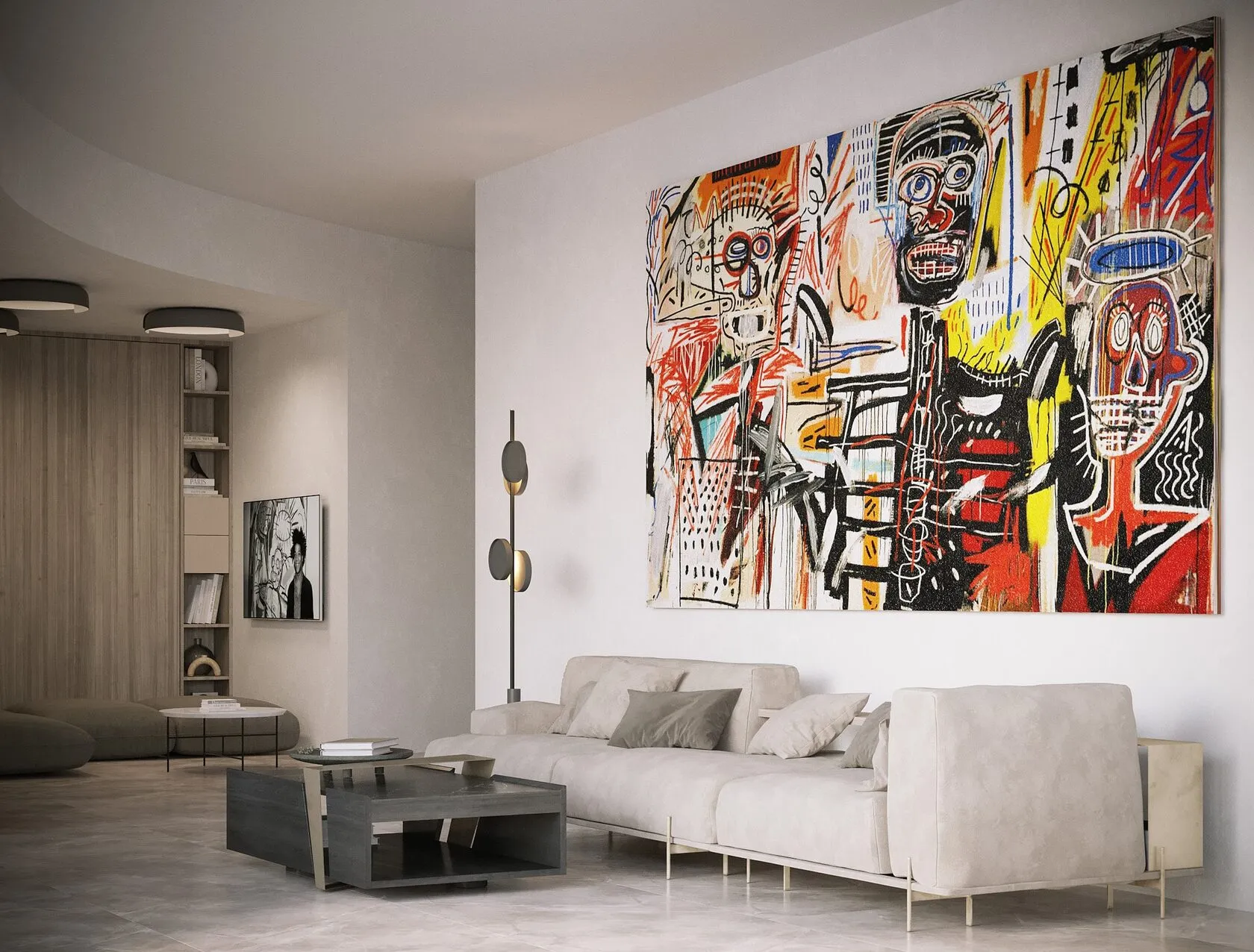
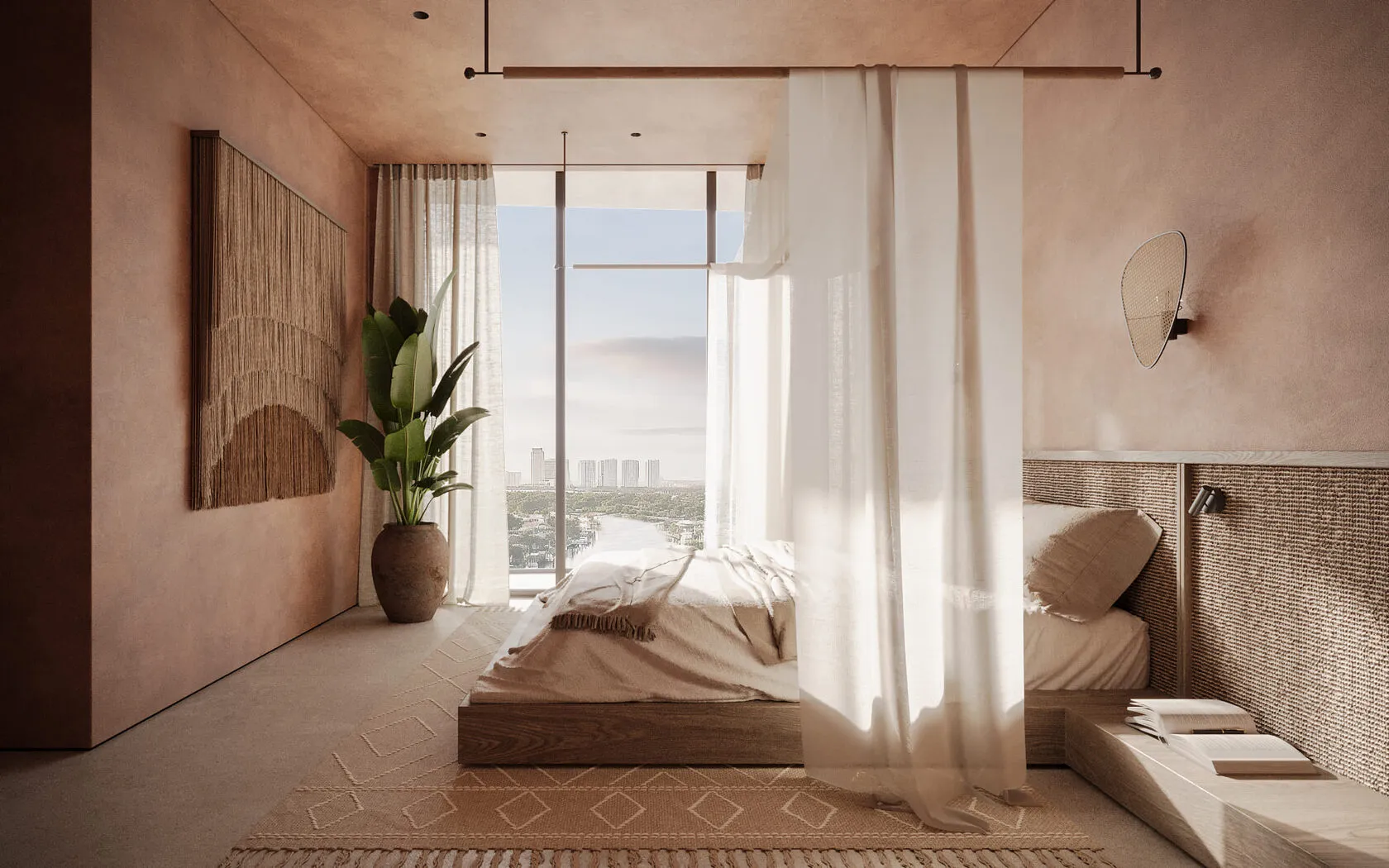
- Plaster. Lime plaster, Venetian plaster or stucco, troweled so the wall shows a slight movement and catches light at an angle. This is the single material that makes a room read as Mediterranean, and it works well beyond Mediterranean houses: in an oceanfront apartment we designed at the Residences by Armani/Casa in Sunny Isles, neutral Venetian plaster gives the walls soft depth behind a collection of large contemporary canvases.
- Stone. Travertine and limestone for floors, stairs and fireplace surrounds. In South Florida there is also a local stone with a story: keystone, a fossilized coral limestone from the Keys, quarried for decorative work on Windley Key until the 1960s. You can still see the shells and corals in it.
- Terracotta. Handmade tiles for floors and terraces, in tones from pale pink to deep rust. In a modern room I lay them in a simple pattern and finish them matte.
- Wood. Ceiling beams, doors and shutters in oak, cypress or reclaimed timber. Many 1920s Florida houses have pecky cypress ceilings, where a natural fungus left the wood full of small pockets; it is a material worth keeping wherever it survives.
- Tile. Patterned cement tile, often called Cuban tile in Miami, belongs to the same tradition. In a modern interior I use it in one room, not everywhere.
Mizner took materials seriously enough to make them himself. In 1919 he founded Mizner Industries, which produced roof and floor tile, cast stone, wrought iron, Spanish-style furniture and leaded glass for his houses.
A sun-washed palette
The palette is the color of materials that have spent years in the sun. Warm white and sand on the walls; ochre, terracotta and rust in the floors and pottery; olive and sage from the garden; and one cool note, azure or a deep sea blue, used sparingly, in a tile or a glass lamp.
Two things keep it modern. The first is proportion: most of the room stays in the light, warm range, and the strong colors come from materials rather than paint, so the terracotta is a floor and the ochre is a plaster. The second is the white. A pure, bright white makes plaster look like drywall; a white with a little earth in it lets the texture show. Under Florida sun, warm whites also stay soft at midday instead of turning glaring.
What I avoid is the postcard version: blue shutters on an inland house, olive trees in every pot, a Greek-island palette in a Coral Gables villa that was never Greek. The palette should belong to the house you actually have.
Arches, beams and ironwork, simplified
These three elements give the style its silhouette, and they are the easiest to overdo.
An arch in a modern Mediterranean room is a clean curve cut into a thick wall, with no molding around it and the plaster wrapping into the reveal. Its depth matters more than its decoration: a deep reveal throws a shadow that changes through the day. Niches work the same way, as small arches that hold one object.
Beams can stay dark if the room is tall and bright, but in most Florida houses I prefer them limewashed or in a pale oak, so they add rhythm to the ceiling without pressing down on it. When a 1920s house has original beams in good condition, they stay as they are.
Iron is drawn rather than wrought into curls: a stair rail as a single dark line, a window grille with a simple grid, a light fixture with a thin frame. One or two strong iron pieces in a room are enough.
Indoor-outdoor living, the Mediterranean way
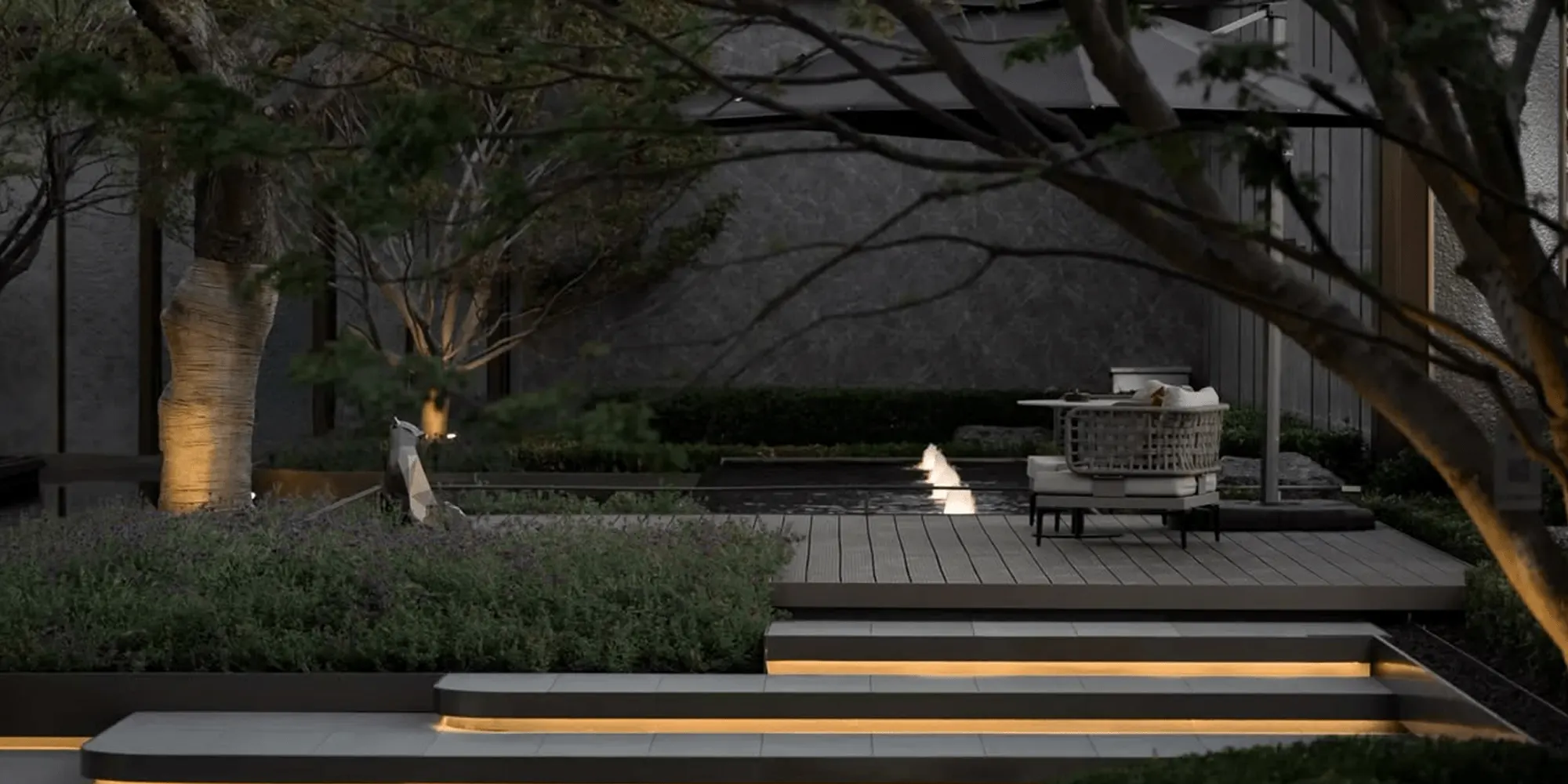
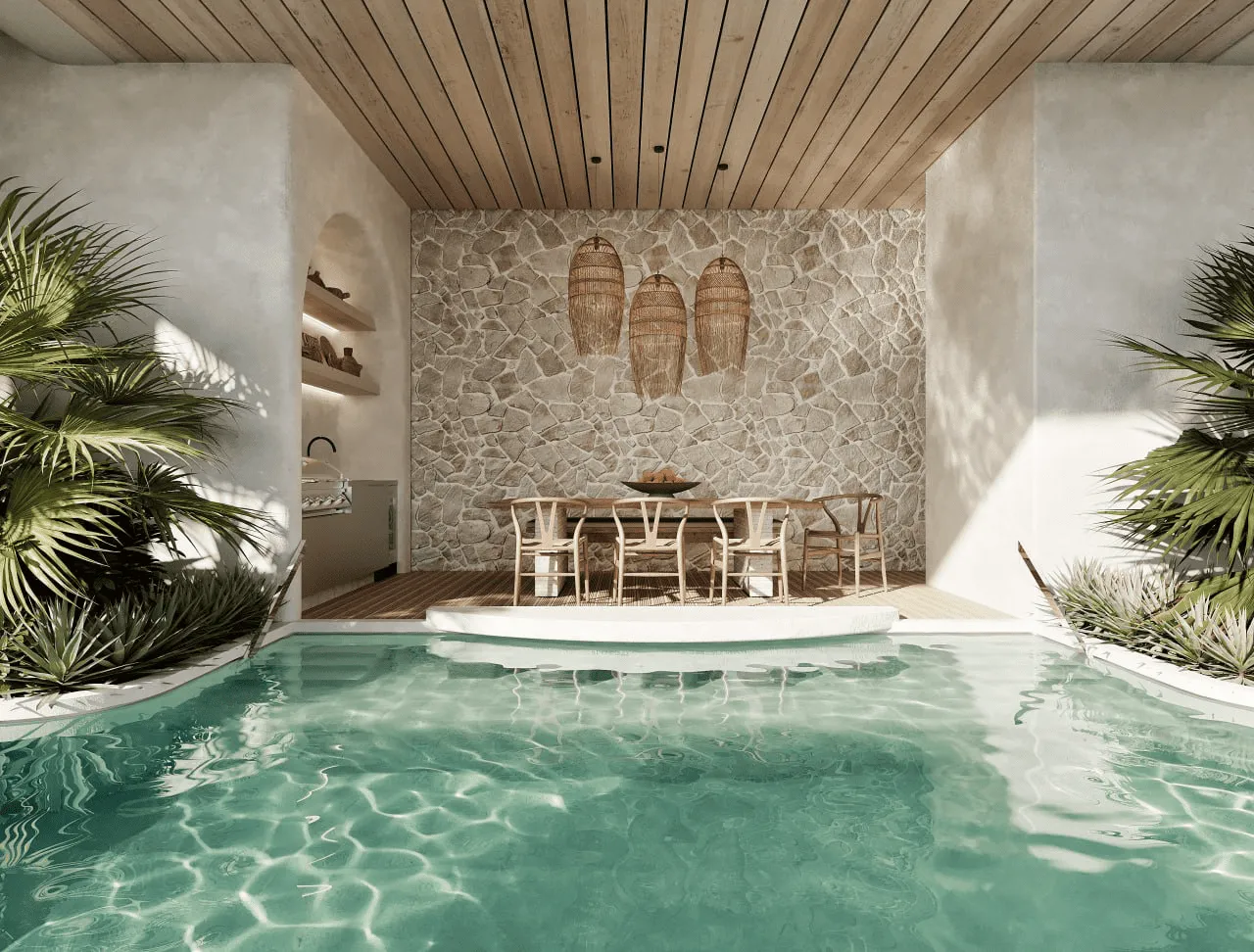
The Mediterranean house solved indoor-outdoor living long before sliding glass walls. Instead of one large opening to the view, it builds a sequence of in-between spaces: a covered loggia, a patio half in shade, a courtyard with a fountain or a tree. Each one is a room without a roof, or a roof without walls.
The South Florida villas of the 1920s used exactly these spaces, and they still work better in this climate than many newer houses do. A loggia gives deep shade at the hottest hour. A courtyard pulls air through the house and gives the rooms around it a private, protected view. When we modernize such a house, I furnish these spaces first, with the same care as the living room. In a new house the idea translates directly: rather than putting all the glass on the waterside, give the plan a courtyard or a loggia and let the most-used rooms open onto it.
Florida’s own Mediterranean: Mizner, Palm Beach, Coral Gables
South Florida did not import this style once; it reinvented it in the 1920s, during the land boom, and gave it a local accent.
Palm Beach. Addison Mizner arrived in January 1918, invited by Paris Singer, heir to the sewing-machine fortune. His first commission, the Everglades Club on Worth Avenue, opened in 1919 and is generally seen as the start of the Mediterranean Revival in South Florida. What followed were houses built around courtyards, arcades and loggias, with barrel-tile roofs, ironwork and deliberately aged surfaces, planned so that a building looked as if it had grown over generations. In Boca Raton his Cloister Inn opened in February 1926, a year before his company went bankrupt. (Historical Society of Palm Beach County, SAH Archipedia)
Coral Gables. George Merrick planned a whole city in the style. Coral Gables was incorporated on April 29, 1925. Merrick’s uncle Denman Fink served as art director and designed Venetian Pool and City Hall, and the architect Phineas Paist completed many of his designs. Venetian Pool opened in 1924 in the quarry that supplied stone for the city’s buildings; the Biltmore Hotel by Schultze and Weaver opened on January 15, 1926. The Mediterranean idea is still written into the city’s rules: Coral Gables’ code defines a local Mediterranean architecture, and its Board of Architects reviews new houses and exterior changes for color, materials, windows and proportion. (City of Coral Gables, Board of Architects)
Miami Beach. The 1920s buildings of the Miami Beach Architectural District are almost all Mediterranean Revival, and the blocks around Flamingo Park hold one of the largest concentrations of Mediterranean-style houses in the country. Española Way, begun in 1922 to a design by Robert A. Taylor, was modeled on the towns of Spain and southern France. (National Park Service, Miami Design Preservation League)
Why the Mediterranean villa is back in 2026
The style is having a revival, and South Florida is celebrating its own origins at the same moment. Coral Gables marked its centennial in April 2025. The Biltmore Hotel and The Boca Raton, which grew out of Mizner’s Cloister Inn, both turn a hundred in 2026.
The broader design world is moving the same way. Veranda named Mediterranean warmth one of the defining looks of 2026, built on limewash, terracotta and natural stone. Houzz compared searches in the first quarter of 2026 with a year earlier and found Venetian plaster up 94%, terracotta flooring up 55%, limewash interior paint up 53% and arched range hoods up 177%.
The 2026 version is calmer than the Tuscan kitchens of the early 2000s, with fewer colors and larger surfaces of a single material. Otherwise it returns to what these Florida houses were built with in the first place, which is why I see it less as a trend than as the latest turn of a style that has been at home here for a hundred years.
Modernizing a 1920s villa without losing its soul
A historic Florida villa usually arrives with two layers: what the original builders made, and what decades of owners added. My first job is to separate them.
What I keep. High ceilings, beams and pecky cypress. Original cement or terracotta tile, even if it is worn; it can be cleaned, repaired and sealed. Arched openings, niches and deep window reveals. Original ironwork, keystone and carved stone. These are the things a new house cannot buy.
What I simplify. Faux-finished walls, heavy drapery, dark stained wood on every surface, and the layers of ornament added in later renovations. Underneath, there is usually a calm house waiting.
What I replace. Kitchens and bathrooms, which rarely survive in useful form; electrical, plumbing and air conditioning; and windows and doors, which in Miami-Dade and Broward must be impact-rated or protected by approved shutters. Arched openings need impact glazing made to their shape, which takes longer to order, so it goes into the schedule early.
Before touching the exterior, check the rules. In Coral Gables new work and exterior changes go before the Board of Architects, and properties with a local historic designation also need approval from the Historic Preservation Board. Other cities have their own procedures, and they are worth confirming before the design is fixed.
| Aspect | Classic Mediterranean | Mediterranean Revival (Florida, 1920s) | Modern Mediterranean |
|---|---|---|---|
| Materials | Local stone, lime plaster, terracotta, timber | Stucco, barrel clay tile, keystone, pecky cypress, cement tile, wrought iron | Lime and Venetian plaster, travertine, matte terracotta, pale oak, thin iron |
| Palette | Earth, ochre, white, sea blue | Warm stucco tones, rust tile, dark wood | Warm white, sand, ochre, olive, one cool accent |
| Forms | Thick walls, small windows, courtyards | Arcades, loggias, bell towers, asymmetrical facades | Clean arches, deep reveals, niches, simple volumes |
| Furniture | Rustic, solid, handmade | Spanish and Italian reproductions, heavy carved pieces | Simple solid pieces, linen, rattan, few objects |
| Mood | Rural, sun-baked | Romantic, theatrical, aged on purpose | Calm, warm, textured |
Plaster, limewash and iron in a humid climate
Mediterranean materials were developed for a dry summer. South Florida’s summer is wet, and a few of them need adjusting. We go deeper into materials in a separate article on interior materials for South Florida; here are the points specific to this style.
- Lime plaster and limewash suit humidity better than most people expect. Lime lets water vapor pass through the wall more freely than cement-rich mixes and is naturally alkaline, which discourages mold on the surface. The wall still needs ventilation and a working air-conditioning system behind it.
- Historic stucco on 1920s houses was mostly soft and lime-based. Patching it with hard Portland cement creates rigid spots that crack and let water in, as the National Park Service warns in its guidance on historic stucco. Repairs should match the original mix.
- Wrought iron near the ocean rusts. Outdoors I specify galvanized or powder-coated steel, or bronze, and plan for periodic maintenance.
- Arched openings still need hurricane protection. Custom arched impact windows exist, but each is made to measure and carries its own product approval.
The wall as a canvas
In the Mediterranean the wall was never only a background. Frescoes, mosaic floors and tiled fountains made the surface of the house part of its meaning, and this is the side of the style closest to my own training. Before I designed interiors, I studied monumental art at the Repin Academy of Arts: mural painting, mosaic and stained glass, the crafts of decorating a building rather than a canvas.
In a modern Mediterranean house I use that tradition with restraint. A single mural on the wall of a loggia, painted in mineral colors that sit inside the plaster rather than on top of it. A mosaic panel in a shower or around a fountain, set by hand. A stained-glass window on a stair where the light comes in low. One such piece, made for its place, does more for the house than a room full of bought decor.
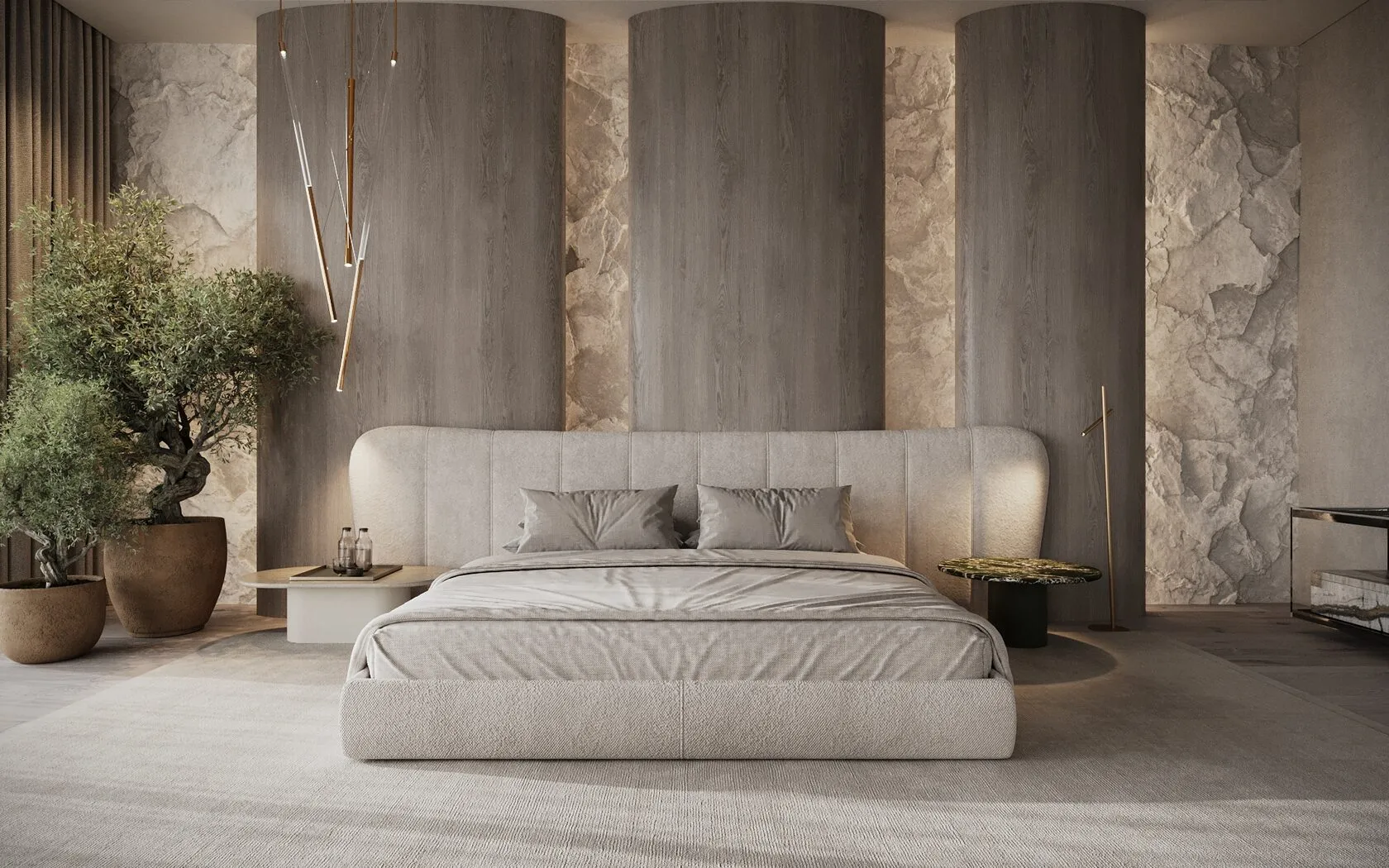
The Palm Beach project we completed shows a related idea at the scale of architecture: walls of textured stone and wooden columns, where the surfaces themselves carry the room. See the Palm Beach project.
If you would like a mural, mosaic or stained glass made for your house, tell us about the wall and the light it receives.
About the author
Timofei Pivnik is an interior designer and the founder of Timroom, a studio in Miami Beach. He is a member of the American Society of Interior Designers (ASID) and received a Silver award at the 2025 International Design Awards (IDA). He trained as a monumental artist at the Repin Academy of Arts, where he worked in murals, mosaic and stained glass and received a gold medal of the Academy of Arts. He has designed interiors since 2012: more than 150 projects and over 86,000 square feet. Modern Mediterranean is one of the studio’s signature styles. More about Timofei and the studio.
Frequently asked questions
What is modern Mediterranean interior design?
A pared-down version of the Mediterranean house: lime plaster walls, stone and terracotta floors, clean arches, limewashed or pale beams and simple iron, in a warm, sun-faded palette. It keeps the materials and the indoor-outdoor plan and drops the heavy ornament.
What is Mediterranean Revival architecture in Florida?
A style of the 1920s land boom that adapted Spanish, Italian and Moorish sources to South Florida, with stucco walls, barrel-tile roofs, loggias and courtyards. Addison Mizner in Palm Beach and George Merrick in Coral Gables are its best-known builders, and Miami Beach's Flamingo Park area keeps many examples.
How do you modernize a Mediterranean-style home?
Keep the original structure and materials (ceilings, tile, arches, ironwork), remove later layers such as faux finishes and heavy drapery, and replace systems, kitchens, bathrooms and windows. Check local review rules before changing the exterior.
What colors are used in modern Mediterranean interiors?
Warm white and sand as the base, with ochre, terracotta, olive and sage, and one cool accent such as azure. The strong colors usually come from materials, like a terracotta floor or an ochre plaster, rather than from paint.
What is the difference between Mediterranean and Spanish style?
Spanish style is one branch of the Mediterranean family, with darker wood, heavier ironwork, patterned tile and Moorish details. Mediterranean is broader and includes Italian, Greek and southern French influences; the modern version is lighter than either.
Is Mediterranean style coming back in 2026?
Yes. Veranda listed Mediterranean warmth among the key looks of 2026, and Houzz reported steep growth in searches for Venetian plaster and terracotta floors. The current version is calmer than the Tuscan look of the 2000s.