Organic Modern Interior Design for a Florida Coastal Home
Organic modern at villa scale on the Florida coast: materials, palette, forms and climate, shown on real Timroom projects in Miami Beach and Aventura.
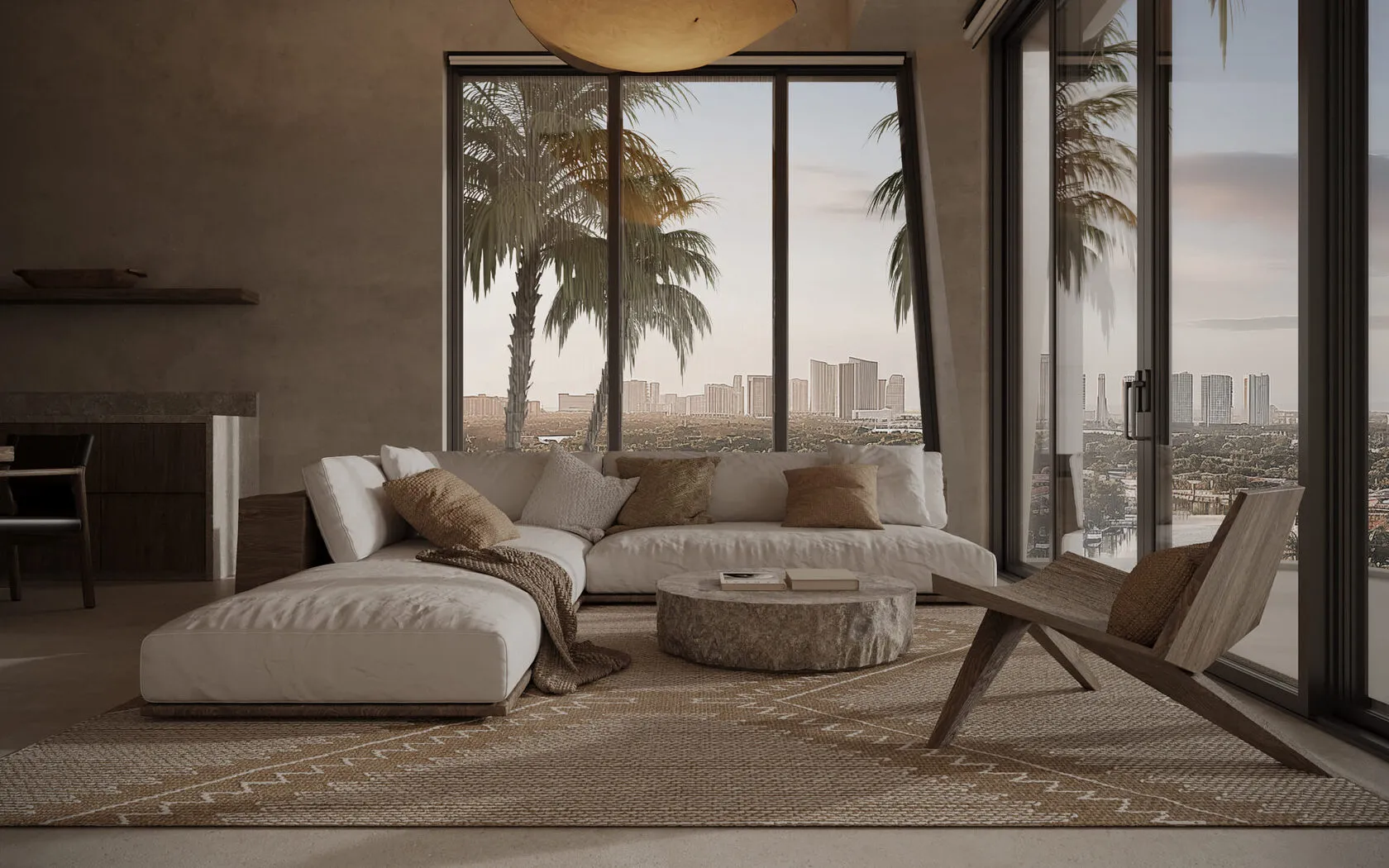
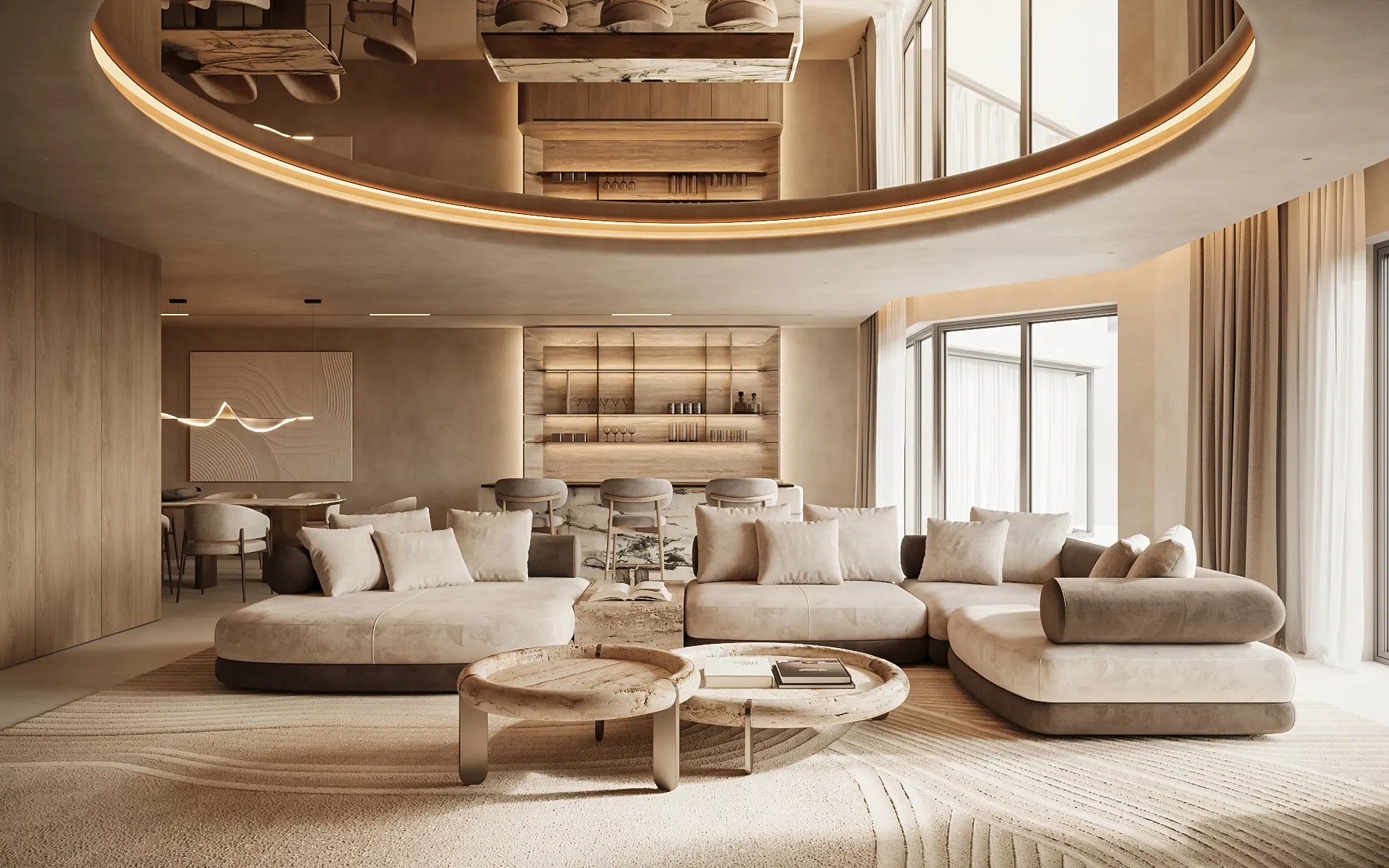
Organic modern interior design builds a room from natural materials, soft geometry and a restrained palette, so the house feels calm before a single object is styled. It is the first of our studio’s signature styles, and the place where it is tested hardest is a waterfront house in Florida. The sun fades unlined linen, the air carries salt, and the living room often rises two stories behind a wall of glass. Below is how I approach the style at that scale, with examples from our projects in Miami Beach and Aventura.
What organic modern really is
The idea is older than the hashtag. Frank Lloyd Wright was writing about “organic architecture” by 1908, and in 1941 the Museum of Modern Art opened Organic Design in Home Furnishings, an exhibition born from a competition its curator Eliot Noyes ran the year before. Noyes described organic design as parts organized into a whole according to structure, material and purpose. Charles Eames and Eero Saarinen won two categories with furniture in bent, curved wood. A decade earlier, Alvar Aalto had shaped the Paimio chair from bent birch because he preferred the warmth of wood to tubular steel.
Today’s version applies the same idea to the whole house. My own definition has four parts.
- Warmth. Wood, stone, plaster and wool that change slightly with the light and with time.
- Restraint. Few materials, used in large, calm planes, and fewer objects than you think you need.
- Nature. A palette taken from the site itself, and a house that opens to its garden and water.
- Sculpture. Curved walls, rounded furniture and lamps that read as objects, so the room has a center of gravity.
What separates this from the store version is where the material lives. Organic modern from a catalog is a beige sofa, a jute rug and a ceramic vase. In a house we design, the material is in the architecture: the stone of the floor runs out to the terrace, the oak lines the wall, and the plaster is applied by hand on site. The decor comes last and there is less of it.
Natural materials that carry the room
In organic modern, materials do the work that color and pattern do in other styles. I usually choose three or four and let each one cover a large surface rather than scattering ten across the house.
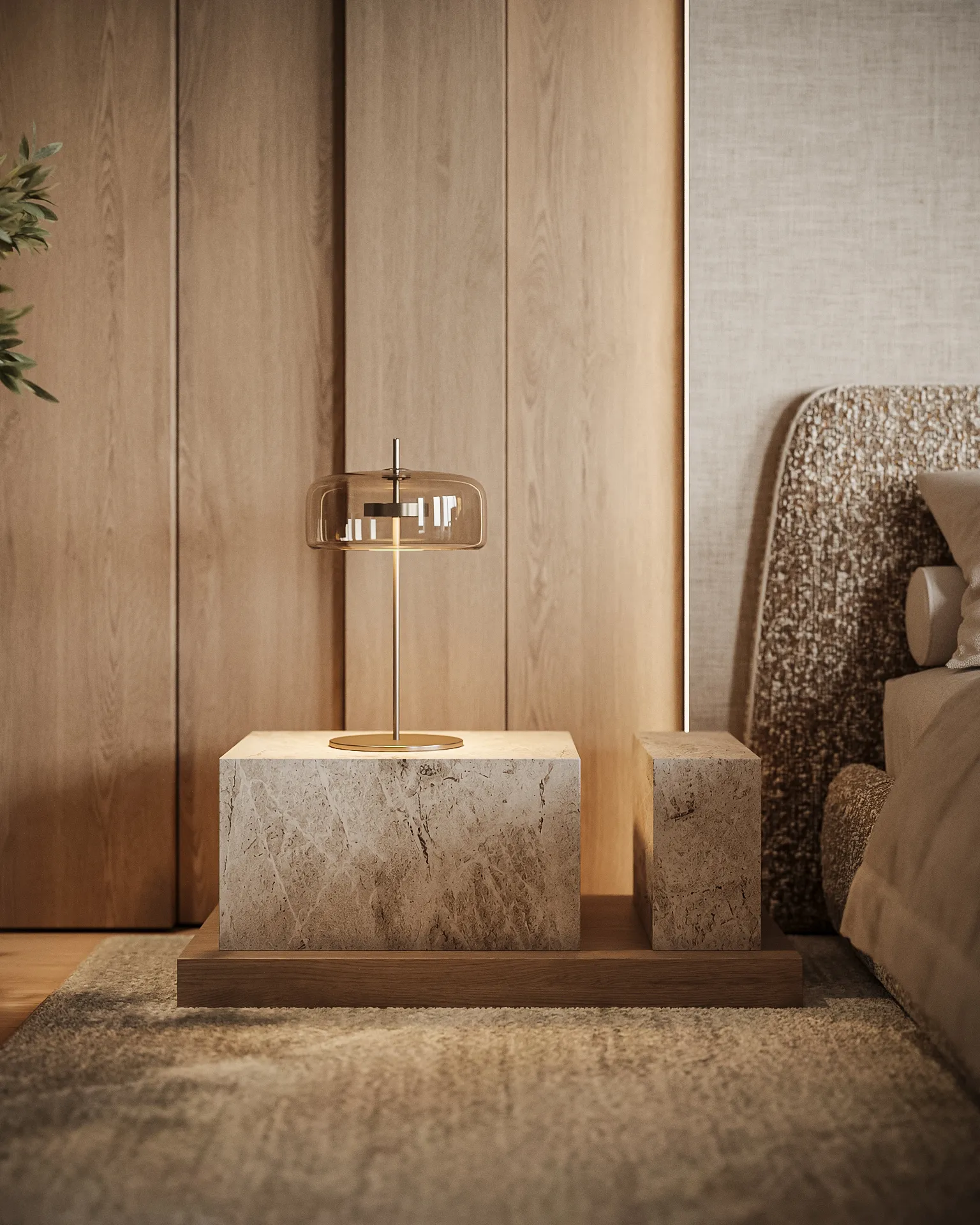
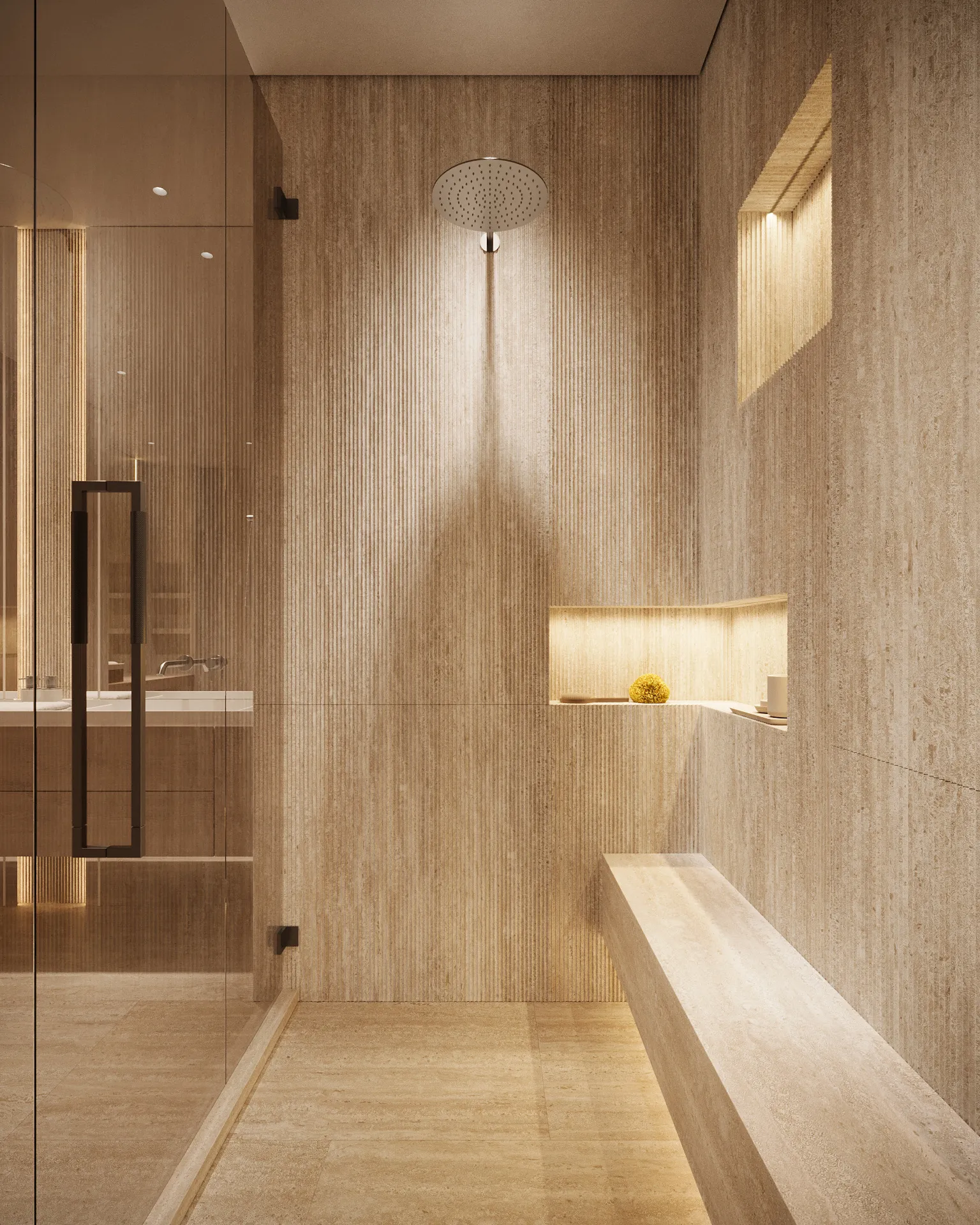
- Travertine. A porous limestone with small natural voids. Fluted, it turns a plain wall into a surface that changes with the hour; honed or brushed, it gives a floor that is warm underfoot and less slippery when wet than polished stone.
- Limestone. Quieter than travertine, with a soft, even face. Like all calcareous stone it etches under lemon juice, wine or coffee, so I keep it on walls and in bathrooms more often than on kitchen counters.
- White oak and walnut. Oak for floors, millwork and wall paneling, walnut where the room needs a darker note, for example a library or a bar.
- Plaster. Lime or Venetian plaster gives a wall depth that paint cannot. In a double-height room it is often the main material.
- Linen, wool and bouclé. Linen for curtains and slipcovers, wool and bouclé for upholstery that people actually sit on.
- Ceramic and stone objects. Handmade, slightly irregular, and few.
The test I use is simple: if the furniture left the room, would it still feel finished? When the floor, walls and ceiling are already finished in natural materials, the answer is yes.
Stone can do more than cover surfaces. In Monoscape, a family house we designed around wood, natural stone and architectural concrete, the stone is structure rather than cladding: the first stair tread, the base of the fireplace and the dining table are cut from whole slabs, and the kitchen island stands on massive slabs of quartzite. Pieces that weigh hundreds of pounds give a modern house the sense of being rooted.
A palette taken from the coast
The colors come from what is outside the window: sand, pale stone, weathered wood, the gray-green of sea grape and palmetto. On the Bella Vista project in Aventura we kept the entire apartment to one palette of sand, oak and pale stone, and the restraint is what makes it feel generous. Cream, taupe and soft whites carry the walls; sage and terracotta appear in small doses, such as a ceramic bowl or one upholstered chair.
Florida light changes how these colors read, and most organic modern guides are written for a gentler sun. In Miami the average UV index is above 10 from April through July, a level the EPA classes as very high to extreme.
Cool whites suffer first. A white with a blue or gray undertone looks crisp in a showroom and clinical against a bright Miami sky. I specify whites with a little warmth in them, closer to the color of plaster, so they stay soft at noon and glow in the evening.
Gloss is the next problem. Paint makers note that the same color reads lighter in a higher sheen, and in a room facing the water a glossy wall or lacquered cabinet throws the sun straight back at you. Matte and eggshell walls, honed stone and oiled wood absorb the light instead.
Then there is fading. Saturated colors and unlined fabrics lose color fastest near west- and south-facing glass, while earthy mid-tones age more gracefully.
Curves, low lines and sculptural pieces
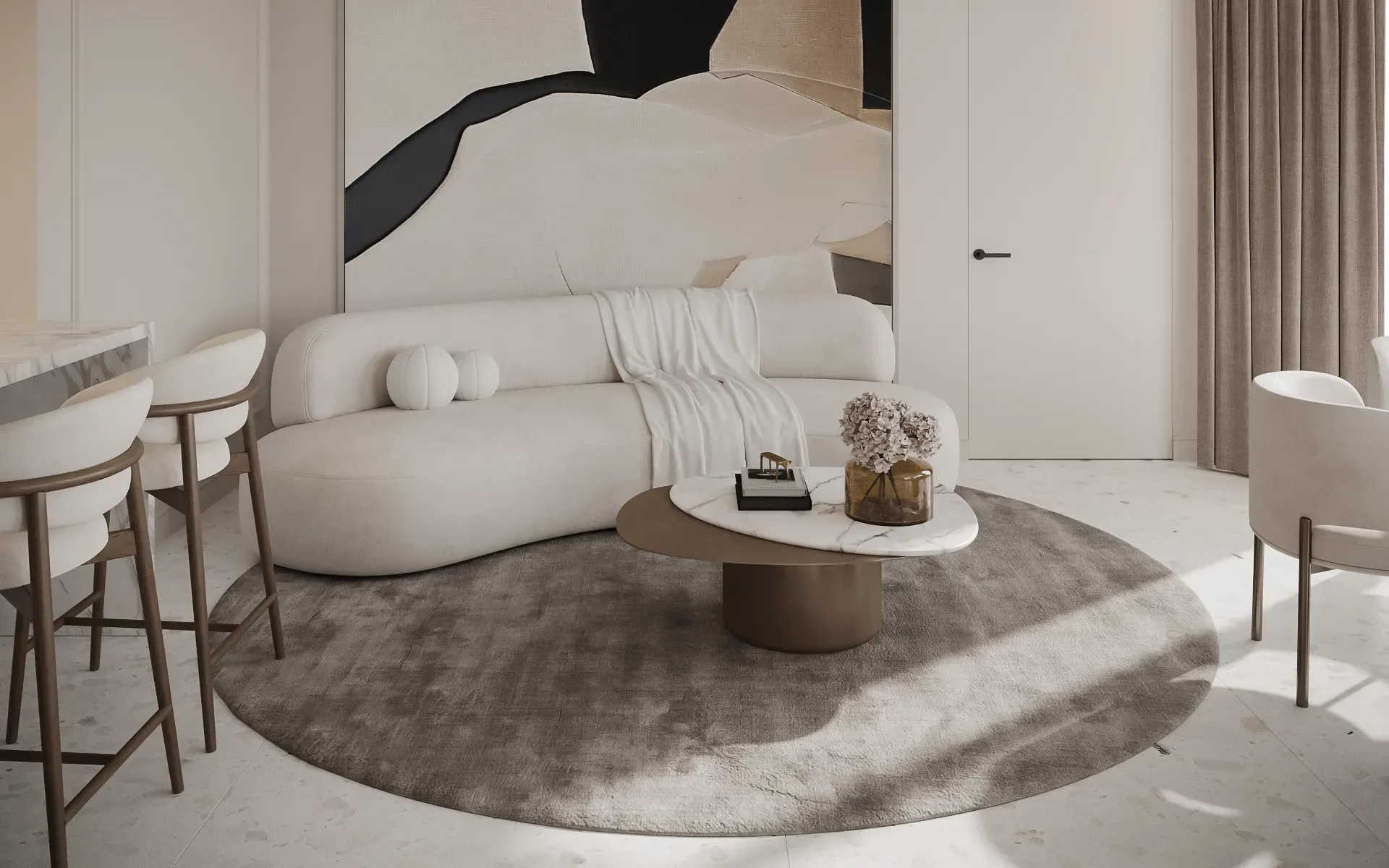
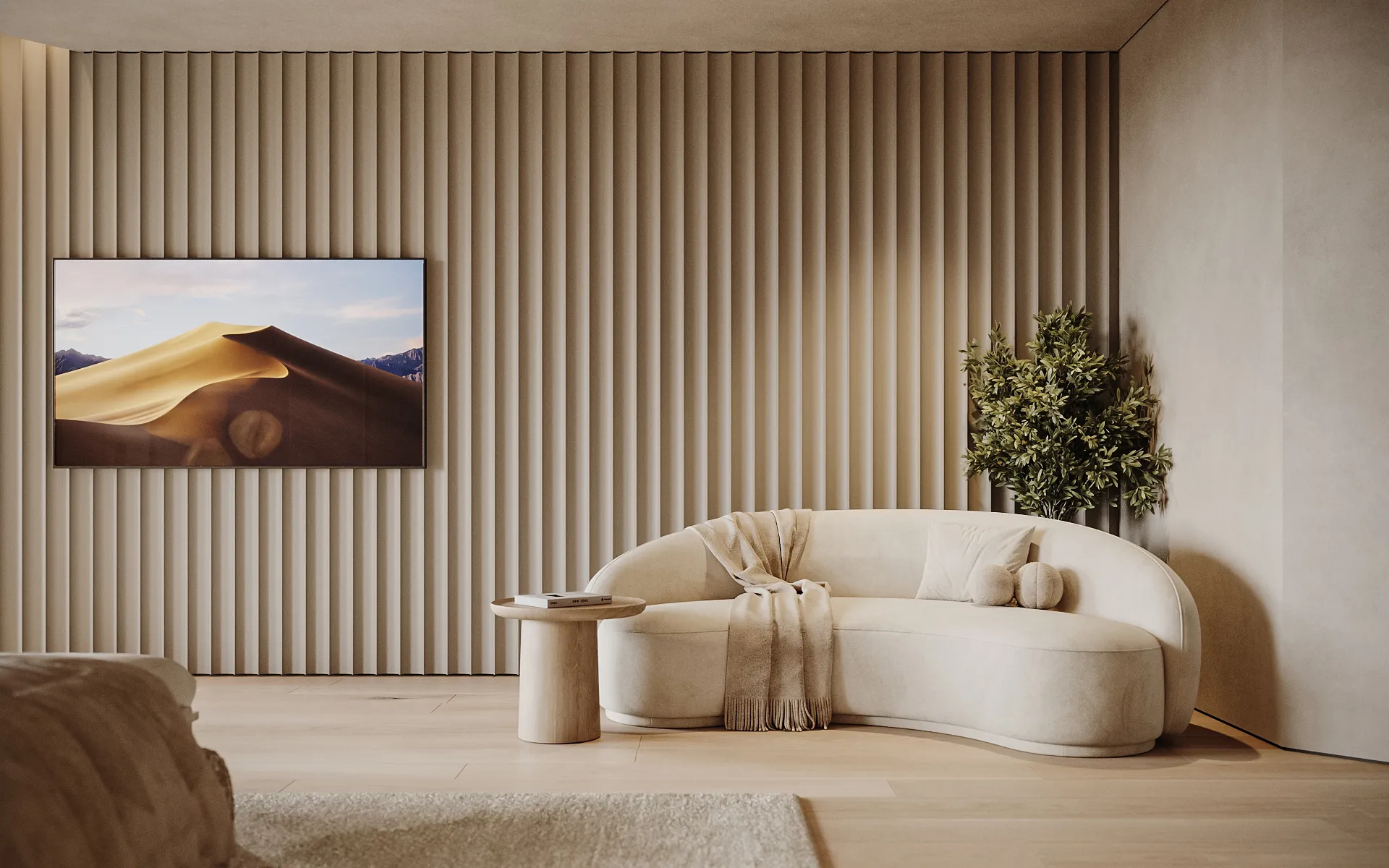
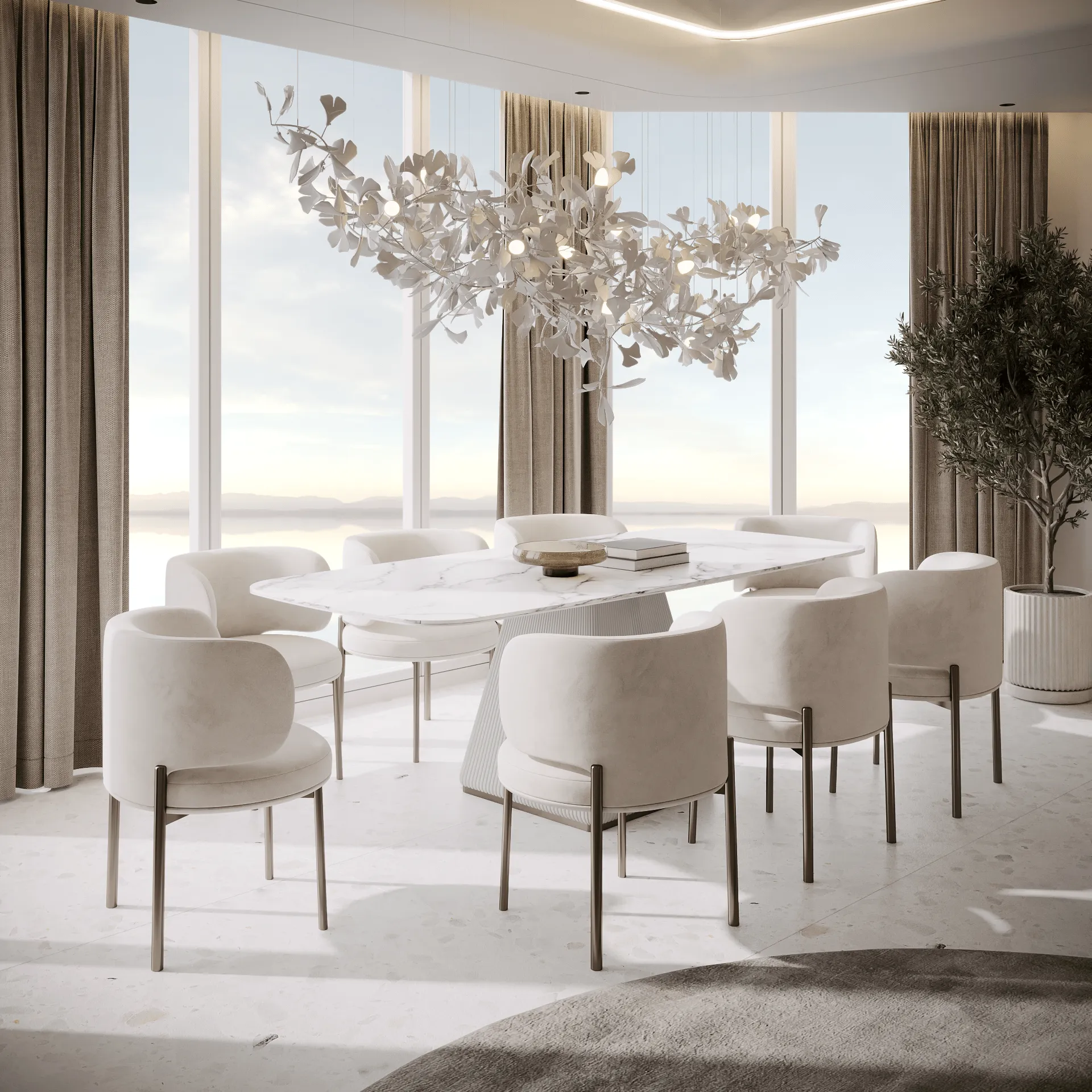
A room of straight-edged stone and wood needs something soft to sit against it. That is the job of curves: a sofa that bends around a coffee table, an arched opening, a rounded island, a table with a pebble-shaped top. In our La Perla project we described the aim as organic softness held by sculptural precision, and the precision matters. A curve that is slightly off looks cheap; a curve drawn to the right radius looks inevitable.
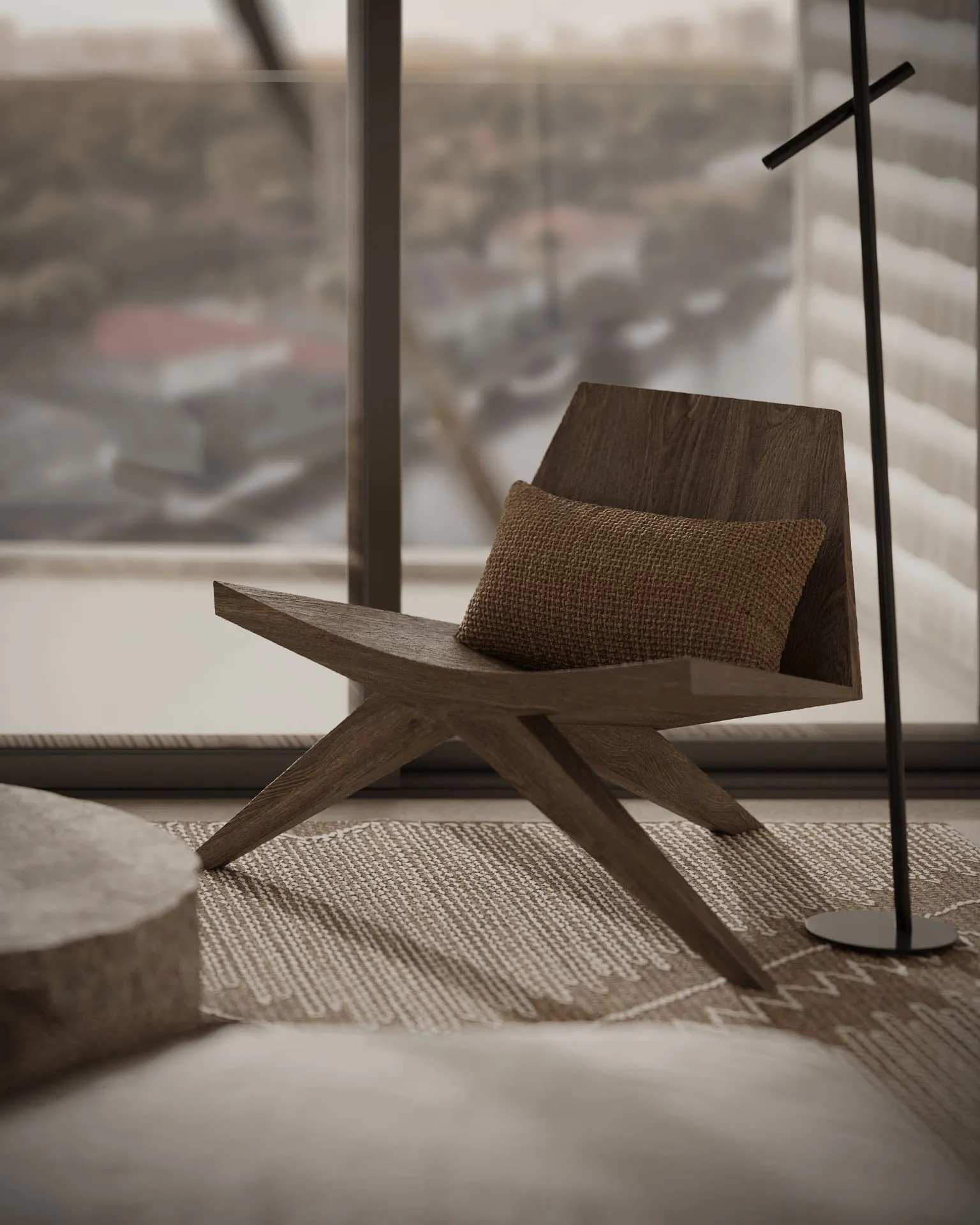
Low profiles do the rest. Seating with a low back keeps the view to the water open from the entrance, and it makes a tall room feel taller. Sculptural lighting, in plaster, paper, alabaster or hand-blown glass, gives each zone a focal point without adding clutter.
In the Miami Beach Villa the living room is lit by large handmade fixtures shaped like leaves or clouds. In Monoscape we made a chandelier for the kitchen island from a gnarled piece of natural wood with an LED line set into its curves, so the light comes out of the grain itself.
This is also where our own furniture comes in. Since 2023 we have made pieces under the Timroom Furniture name: flowing, organic forms in natural materials, which we think of as sculpture for everyday life. They are drawn for the rooms they will stand in, so the curve of a sofa answers the curve of a wall.
Why organic modern keeps coming back
Every few years this approach gets a new name, from quiet luxury to warm minimalism. In 2026 it shows up clearly in the data. Houzz compared searches in the first quarter of 2026 with the same period a year earlier and found sandstone up 257%, Venetian plaster up 94%, limewash up 53%, rounded kitchen islands up 123% and chocolate brown up 153%. At Salone del Mobile in Milan in April 2026, surface makers singled out travertine and walnut as the materials of the fair. Two of the big paint companies chose earth for their 2026 colors: Sherwin-Williams picked Universal Khaki, a soil-toned neutral, and Benjamin Moore picked Silhouette, an espresso brown.
What is new is the depth of color. A few years ago the style meant almost all white and oatmeal; now walnut and brown sit alongside the pale stone, which suits a large Florida house that needs some weight at its base.
What is not new is the reason people want it. These materials were here long before the trend reports, and a house built from them does not date when the next name arrives. I design for the house that will still look right in fifteen years, and I treat the trend figures as confirmation, not direction.
Organic modern at villa scale
Most photographs of organic modern show a corner: an armchair, a lamp, a vase of branches. A waterfront villa is a different problem. The living room may be thirty feet across and two stories high, with glass on two sides, and the same calm materials that feel cozy in a city apartment can feel thin and cold at that size.
These are the moves I rely on to keep warmth in a large open plan.
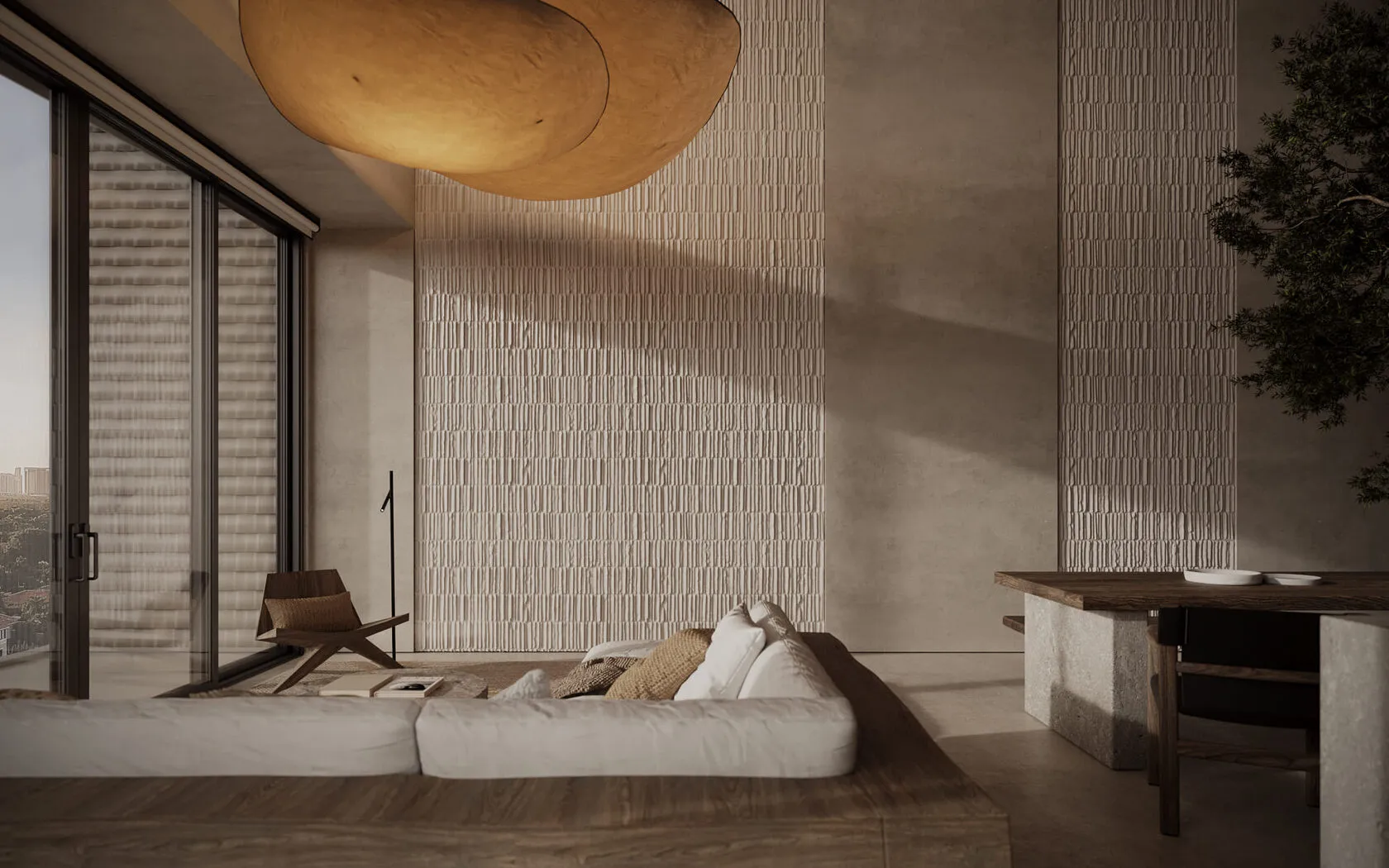
- Give the tall wall a material. A double-height wall in plain paint becomes a white screen. In plaster, fluted stone or vertical oak it catches raking light through the day and gives the room a backbone.
- Bring the ceiling down where people sit. An oak ceiling plane over the dining table, or a deep beam that marks the edge of the lounge, makes a human-scale room inside the large one.
- Size rugs to the group, not the furniture. In a big room a rug should hold every leg of the seating group with room to spare; a small rug floating in a sea of stone is the most common reason a villa looks unfinished.
- Scale furniture up, but keep it low. Deeper sofas and larger tables, with low backs so the water stays in view.
- Light at eye level. Recessed downlights alone make a tall room feel like a lobby. Floor and table lamps, wall lights and a sculptural pendant over the table pull the evening light down to where people are.
If you are buying or building on the water, these decisions are cheapest before construction, while walls, ceilings and electrical are still on paper. We can review the plans with you at that stage and show the rooms in VR before anything is ordered. Talk to us about a villa or house.
Built for the climate, not just the look
Natural materials age. On the ocean they age faster, and the question is whether they age into something you like. We cover materials in detail in a separate article on materials for South Florida, so here are only the points that matter most for this style.
- Wood floors and millwork are happiest at roughly 30–50% indoor humidity, the range the flooring industry treats as normal. In a Miami house that means the air conditioning and dehumidification are designed with the interior, not after it.
- Travertine and limestone need a penetrating sealer and periodic resealing, especially in kitchens, bathrooms and anywhere salt water is tracked in from the pool or beach.
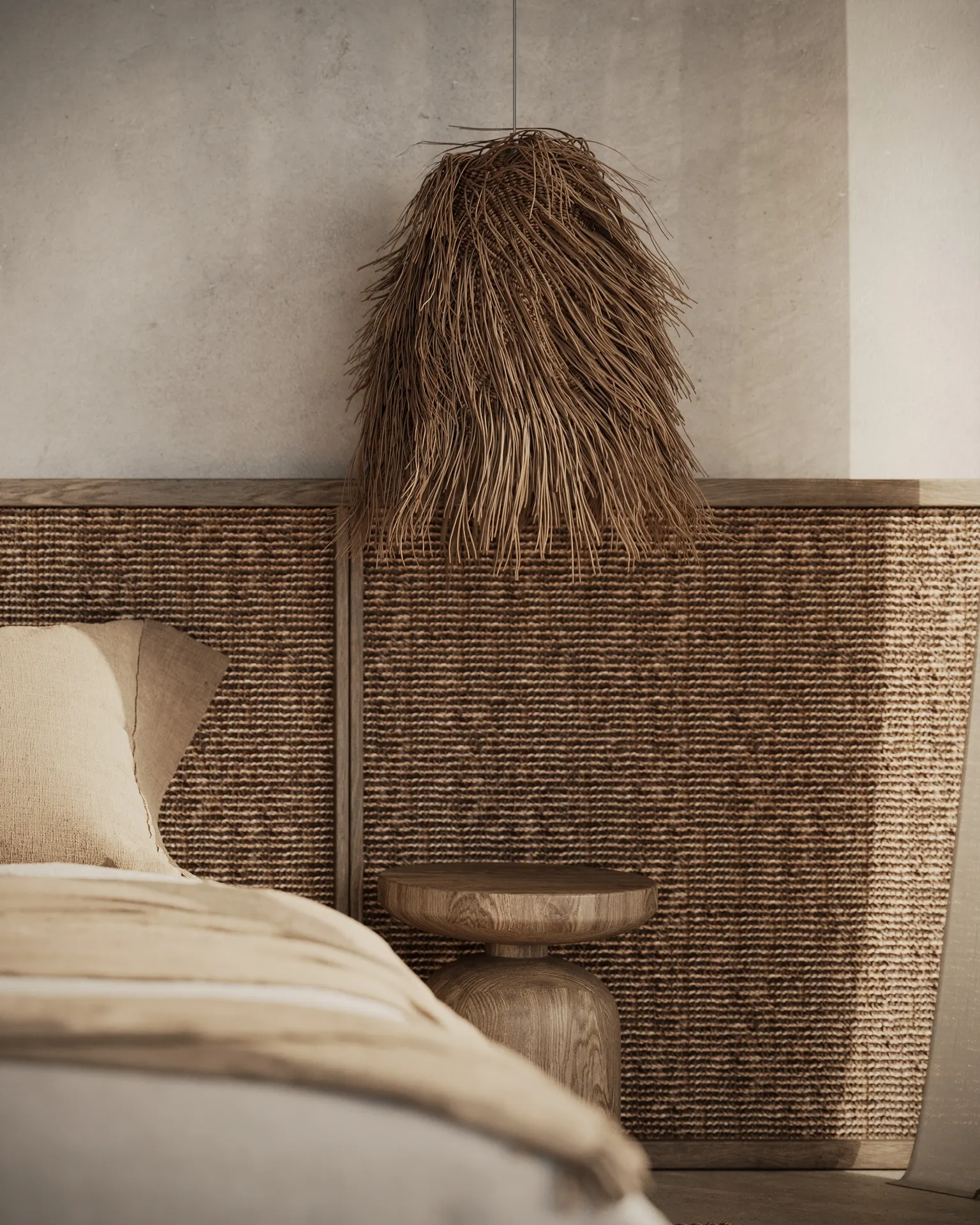
- Jute and sisal absorb moisture and can mildew in a damp room. Near the water I prefer wool or flat-woven rugs.
- Unlined linen fades in direct sun. Lining the curtains and choosing earthy tones keeps them looking intentional rather than tired.
- Unlacquered brass darkens quickly in humid air. Inside, that patina is part of the charm; on exterior doors I use lacquered or marine-grade hardware.
Organic modern, not “beachy”
A house on the water does not have to look like a beach house. Coastal style, as most people picture it, means white walls, blues, shiplap or beadboard and nautical motifs: rope, starfish, striped cushions. Organic modern shares the light and the natural fibers, but it takes its cues from the land around the water rather than from the boat on it, and it leaves out the motifs entirely.
Modern Mediterranean is a closer neighbor. It shares the plaster and the stone, but adds arches, terracotta and ironwork, and it carries a sense of history. We cover it in a separate article on Modern Mediterranean for the Florida villa. Japandi, another relative, is more graphic and more austere: Japanese minimalism and Scandinavian function, with darker accents and very little curve.
| Aspect | Organic modern | Coastal | Modern Mediterranean |
|---|---|---|---|
| Materials | Travertine, limestone, white oak, plaster, linen, wool | Painted wood, shiplap, rattan, cotton | Lime plaster, terracotta, natural stone, wood beams, wrought iron |
| Palette | Sand, cream, taupe, pale stone, accents of sage and terracotta | White, sky and navy blue, soft yellow | Warm white, ochre, olive, terracotta, azure |
| Forms | Curves, low profiles, sculptural objects | Relaxed, casual, slipcovered | Arches, beams, niches, heavier pieces |
| Mood | Calm, grounded, quiet | Breezy, holiday | Sun-warmed, historic, textured |
| Where it fits | Contemporary villas, condos with big glass, new construction | Beach cottages, rentals | Mediterranean Revival houses, homes with courtyards |
Inside a Timroom project
Two projects show the style at two scales.
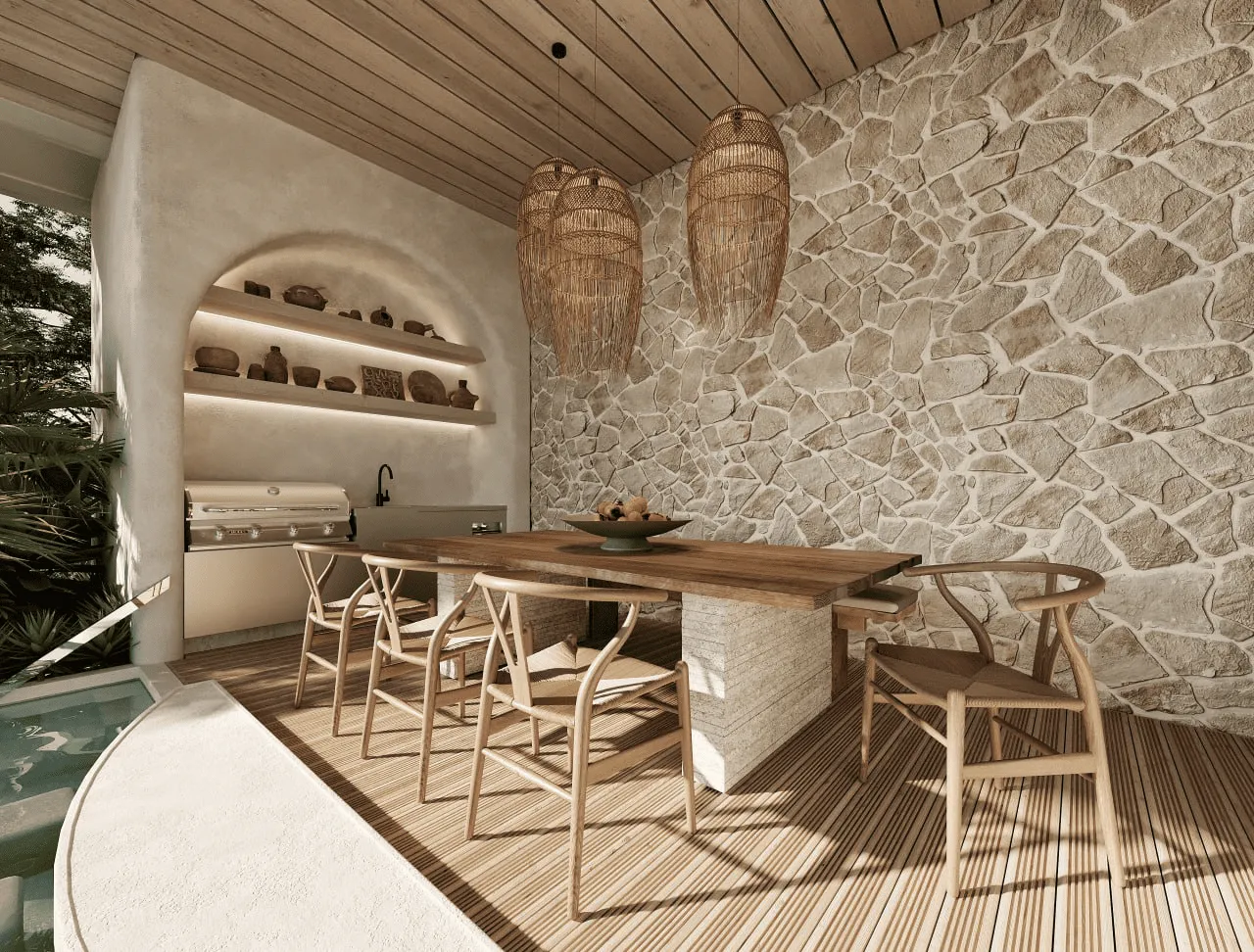
Miami Beach Villa. One of four residences in a waterfront building, designed for a developer who wanted each to feel like a private villa: natural, warm and full of daylight. I chose organic modern to give it relaxed, tropical comfort while keeping the forms clean, with Tulum and Bali as the references. The materials are microcement, limestone, hand-applied plaster, solid wood and rattan; the palette is sand, caramel, terracotta and beige, with rare notes of charcoal brown and bronze. The detail everyone remembers is the kitchen island, which doubles as the dining table and has a real tree growing out of it. See the Miami Beach Villa.
Bella Vista, Aventura. An apartment rather than a villa, and a lesson in restraint. We kept every room to one palette of sand, oak and pale stone. Fluted travertine, veined stone and warm wood paneling carry the walls, and the furniture is soft and low. With so few materials, the light coming off the water becomes part of the design. See Bella Vista Aventura.
About the author
Timofei Pivnik is an interior designer and the founder of Timroom, a studio in Miami Beach. He is a member of the American Society of Interior Designers (ASID) and received a Silver award at the 2025 International Design Awards (IDA). He trained as a monumental artist at the Repin Academy of Arts, where he worked in murals, mosaic and stained glass and received a gold medal of the Academy of Arts. He has designed interiors since 2012: more than 150 projects and over 86,000 square feet. In 2023 he launched Timroom Furniture. More about Timofei and the studio.
Frequently asked questions
What colors are used in organic modern interiors?
Warm neutrals taken from nature: sand, cream, taupe, pale stone and the honey tone of oak, with small accents of sage, terracotta or walnut brown. In strong Florida light, warm whites with a hint of yellow or red work better than cool, gray-based whites.
What is the difference between organic modern and coastal style?
Coastal style uses whites, blues and nautical motifs to suggest a beach holiday. Organic modern uses stone, wood, plaster and natural fibers in warm neutrals, with no motifs, so a house on the water feels calm and permanent rather than themed.
What materials work best for organic modern in Florida?
Honed travertine and limestone (sealed), white oak kept at stable indoor humidity, lime plaster, lined linen, wool rugs and lacquered or marine-grade metal outdoors. Jute and unlined fabrics are better kept away from damp rooms and direct western sun.
Is organic modern still in style?
Yes. In 2026 searches for Venetian plaster, limewash, sandstone and rounded furniture rose sharply on Houzz, and travertine and walnut were among the defining materials at Salone del Mobile. The style is moving toward deeper browns, but its core of natural materials has outlasted several names.
Is organic modern the same as warm minimalism?
They overlap. Warm minimalism is the newer label for a pared-back room in warm tones; organic modern adds curves, sculptural pieces and a stronger link to the landscape outside.
How is organic modern different from Japandi?
Japandi blends Japanese minimalism with Scandinavian function: straighter lines, darker accents such as charcoal or indigo, and materials like bamboo and paper. Organic modern is softer and rounder, and in Florida it leans on stone and plaster more than on bamboo.