Interior Materials That Survive South Florida: Humidity, Salt Air and Sun
Which woods, metals, fabrics and stone survive humidity, salt air and sun in a Miami oceanfront home, from a designer who works in oceanfront towers.
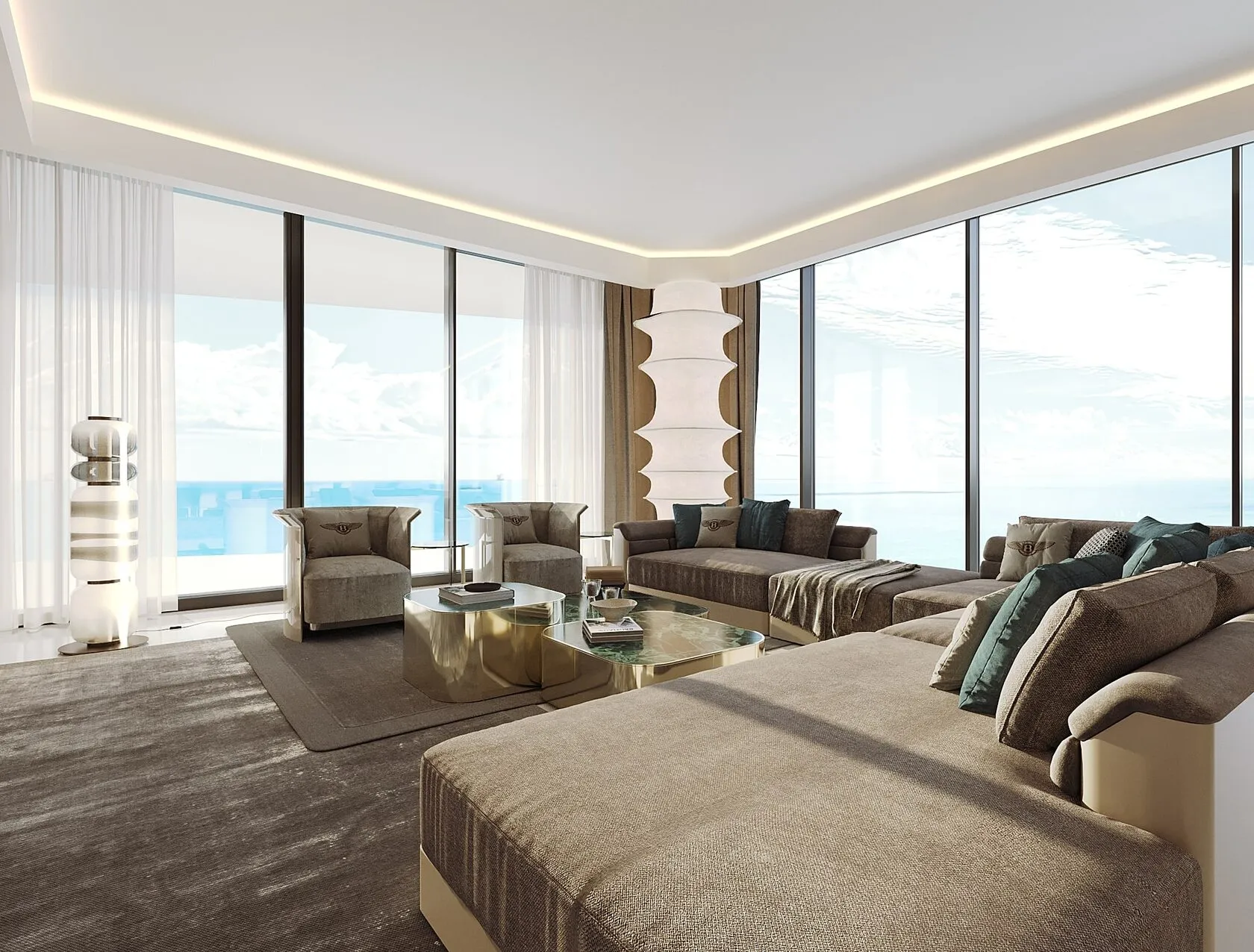
The best materials for a Florida home interior are the ones chosen for humidity first and looks second. In a Miami oceanfront condo, three forces work on every surface at once: moisture that rarely drops, salt carried in on the breeze, and sun that pours through floor-to-ceiling glass. A material that looks perfect in a showroom in New York or Milan can warp, pit or fade within a few seasons here.
I design homes in towers along Miami Beach and Sunny Isles Beach, and the questions clients ask me are always practical. Will this walnut move? Will this brass turn brown? Will this sofa survive the afternoon sun? This guide goes material by material: what holds up, what doesn’t, and how to keep it that way.
Why a Miami oceanfront home ages faster
Miami’s average relative humidity is 82 percent in the morning and 61 percent in the afternoon. In September, the most humid month, it reaches 86 percent before noon (Florida Climate Center). Wood, paper, leather and plaster all absorb that moisture, then release it when the air conditioning runs. That daily swelling and shrinking is what opens joints, cracks lacquer and lifts veneer.
Salt is the second force. On the water, chloride settles on every horizontal surface, travels through open sliders and finds its way into hinges, drawer slides and light fixtures. Combined with humidity, it turns into a thin electrolyte film, and ordinary steel, uncoated brass and cheap plating corrode under it.
The third force is sun. EPA puts the typical midday UV index in Miami at 10 to 11 in summer, which is “very high” to “extreme” (EPA UV Index guide). Behind a wall of glass, that light reaches the sofa, the rug and the art every day of the year.
None of these forces is dramatic on its own. Together, and without a break in the seasons, they age an interior far faster than a northern climate does.
Why it matters more now
The climate pressure on Miami interiors is rising, and so is the appetite for materials that don’t suit it.
The heat keeps building. 2023 was Miami’s warmest year on record, with an average of 79.9°F, and 2025 tied for the eighth-warmest since 1895 (NWS Miami, 2025 summary). In late summer 2025 the heat index stayed at 101°F or higher for 23 days in a row and peaked at a record 108°F, according to University of Miami climatologist Brian McNoldy (UM data). Hotter air holds more water, and air conditioners run longer and harder, which widens the swing between wet and dry inside a home.
Meanwhile, the most fashionable materials of the moment are among the most sensitive. Pinterest named Neo Deco one of its 2026 home trends, and searches for “brass aesthetic” grew 35 percent year over year (Apartment Therapy). Brass, lacquer and velvet are beautiful on the water, but only when they are specified for it.
The good news is that performance fabrics have moved indoors. Textile suppliers now describe them as non-negotiable for durability and cleaning (Mayer Fabrics, 2026), and the choice in colors and textures finally allows them in a living room, not only on a terrace.
A quiet hurricane season changes none of this. The 2025 season brought no hurricane landfall on the continental United States (NOAA), yet interiors still failed for the everyday reasons: moisture, salt and light.
Woods and finishes that stay stable
Wood itself is rarely the problem. Movement is. A solid board takes on and gives up moisture across its width, so the wider and thinner it is, the more it warps. That is why I build most cabinetry and paneling for coastal homes as veneer on a stable core rather than in solid wood.
- Solid wood: fine for frames, legs and narrow pieces. For wide panels and tabletops, choose stable, oily species such as teak, and leave room for movement in the joinery.
- Veneer on plywood: the most reliable choice for millwork. Ask for exterior or marine-grade plywood in kitchens, baths and anything near a balcony door; the glue is designed to resist moisture.
- MDF: smooth and cheap, but it swells and never recovers once water reaches an unsealed edge. Keep it away from sinks, and seal every edge, including the ones nobody sees.
- Finishes: a catalyzed lacquer or a two-part polyurethane forms a hard, moisture-resistant film. Oil finishes look beautiful but need regular care in our climate. Nitrocellulose lacquer, common on vintage pieces, tends to crack and cloud with humidity swings.
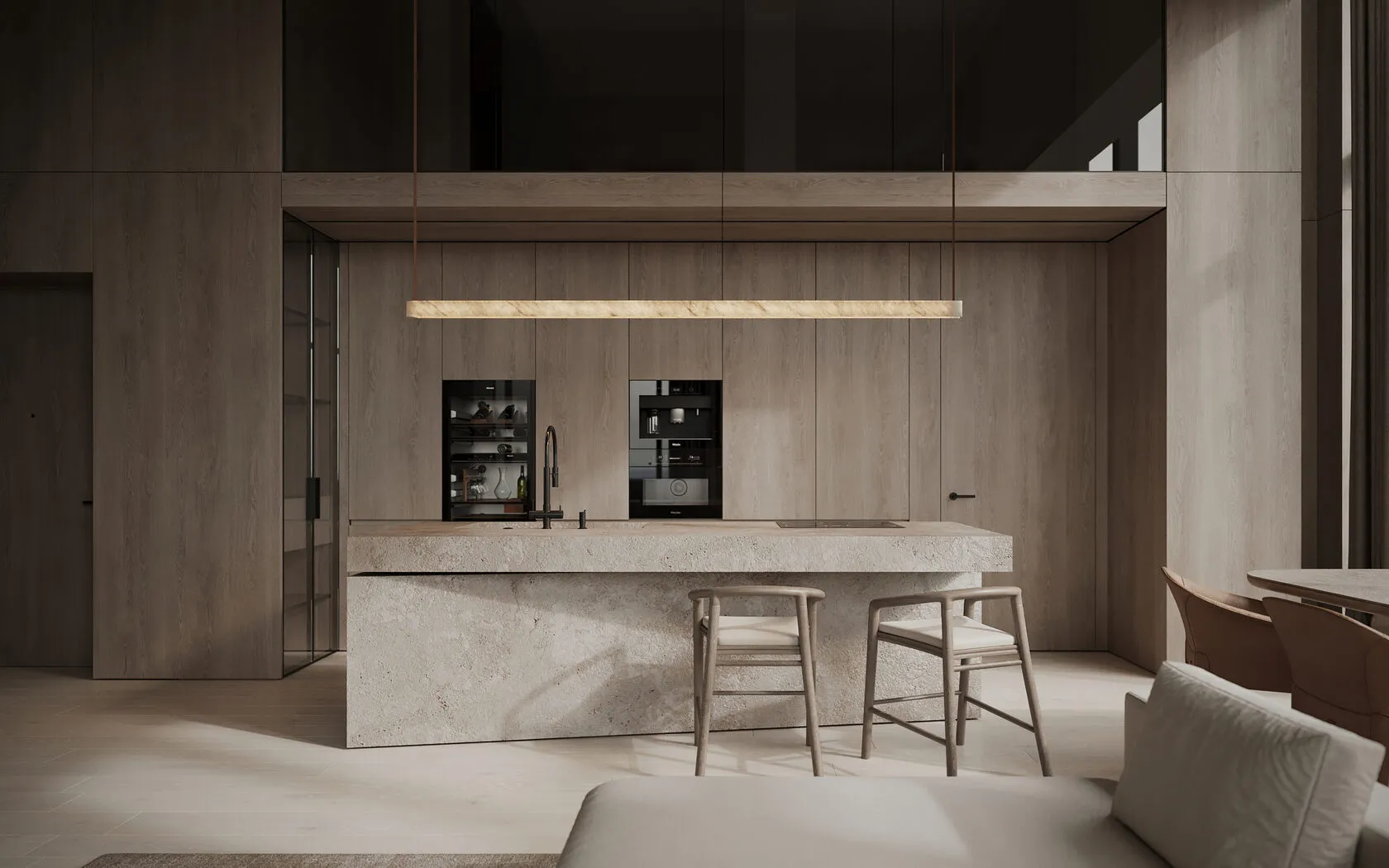
Vintage and antique pieces deserve a word. They were made for a different climate and often with hide glue and shellac. They can live in a Miami home, but away from the windows and the AC vents, in a room whose humidity stays steady.
Metals, hardware and lighting in salt air
Most guides talk about kitchen pulls. In a home on the water, the question is every piece of metal: door hinges, drawer slides, sconces, picture frames, the base of a dining table, the legs of a chair by the balcony.
- Stainless steel: grade matters. Grade 316 contains molybdenum, which improves resistance to pitting and staining from salt (International Molybdenum Association). Grade 304, common in appliances and cheaper hardware, can pit and stain over time on the coast. Even 316 can show light “tea staining” right on the water if it is never cleaned.
- Unlacquered brass: it will darken, sometimes within months. If you like a living patina, choose it knowingly and accept that every piece ages at its own pace.
- Lacquered brass: bright at first, but once the lacquer is scratched, the corrosion starts at that point and spreads under the coating.
- PVD finishes: a thin, hard layer bonded in a vacuum. Brizo, for example, guarantees its PVD finish against corrosion and tarnish for the life of the faucet and says it withstands harsh coastal environments (Brizo). For hardware near the terrace, this is my default.
- Powder-coated aluminum: light and stable, a good choice for furniture frames that move between inside and the balcony.
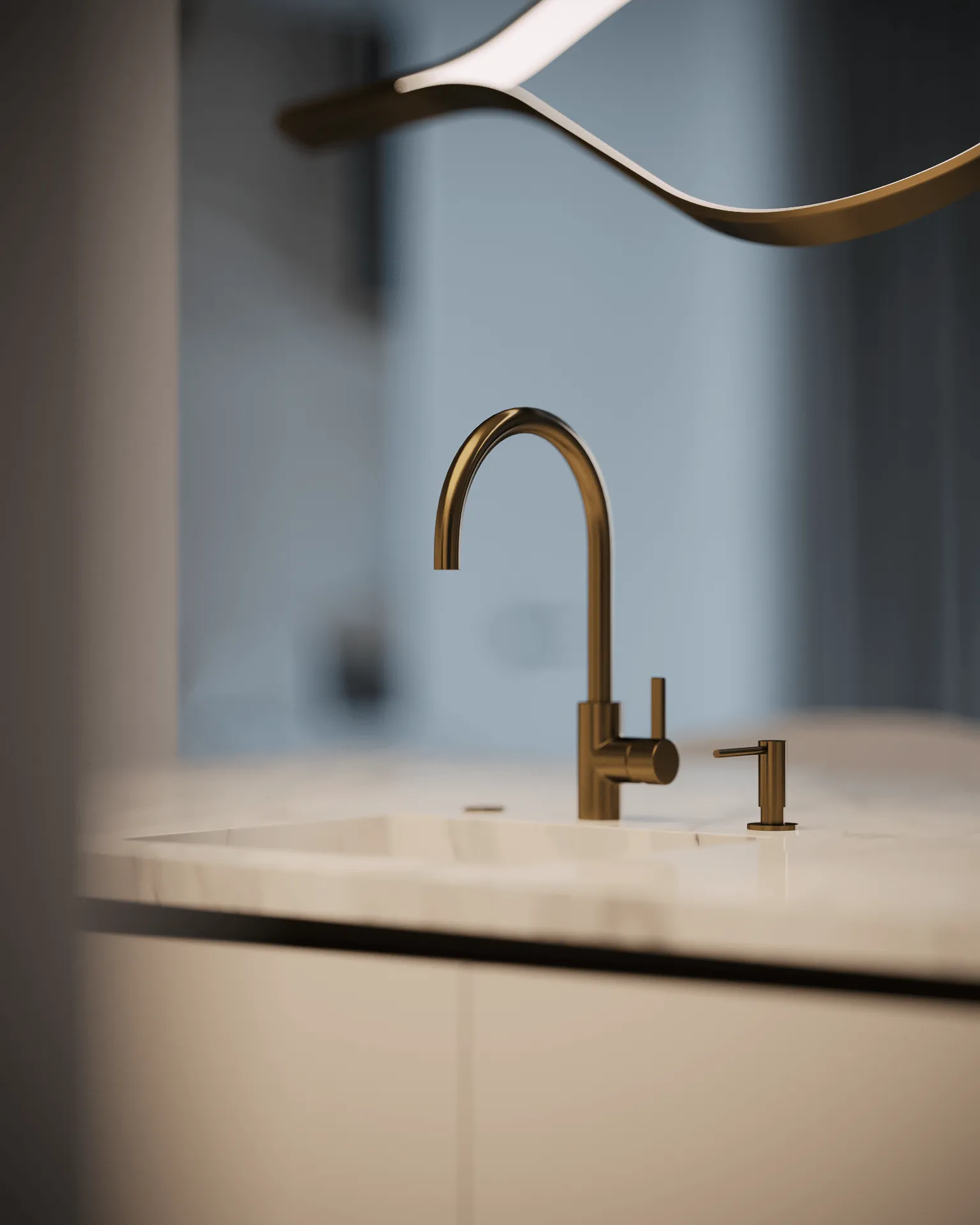
Lighting needs the same thinking. A fixture’s visible finish may be excellent while its screws, springs and sockets are plain steel. I ask manufacturers what the internal parts are made of before I specify a fixture for a room with a balcony.
Fabrics and upholstery: what lasts, what rots
Upholstery fails in two ways here. Humidity feeds mildew deep in the cushion, where you don’t see it until it smells. Sun fades the face of the fabric, usually on the arm nearest the window.
- Solution-dyed acrylic such as Sunbrella: the color is built into the fiber rather than printed on it, so it resists fading, and the fiber doesn’t feed mold. It can be cleaned with diluted bleach (Sunbrella). Today’s collections include soft velvets and bouclés that read as indoor fabrics.
- Performance-treated fabrics such as Crypton: tested for resistance to fungal and bacterial growth, with a moisture barrier that keeps spills out of the cushion (Crypton specifications).
- Olefin: affordable and mildew-resistant, a good choice for rugs and secondary seating.
- Silk and natural velvet: fade quickly in direct sun and spot easily in humid air. I keep them for bedrooms and rooms away from the glass.
- Linen: beautiful and breathable, but it wrinkles and can mildew if it stays damp. Washable slipcovers make it practical.
- Leather: aniline leather fades and can grow mold in a closed, humid apartment. Pigmented leather is far more forgiving.
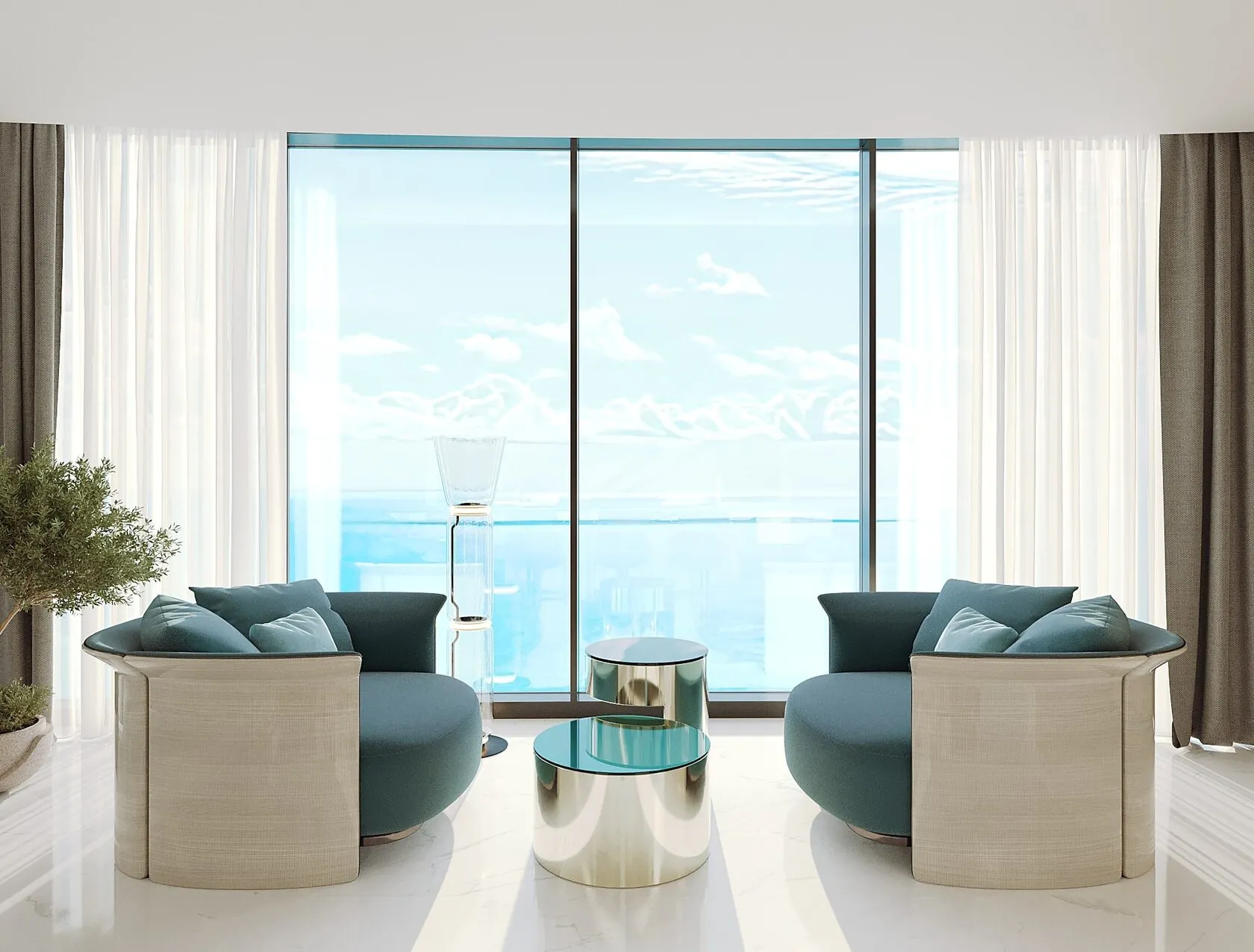
Curtains are the forgotten upholstery. They hang in the strongest light in the room and absorb moisture from the glass. A lining in a solution-dyed fabric protects both the curtain and the furniture behind it.
Floors and stone
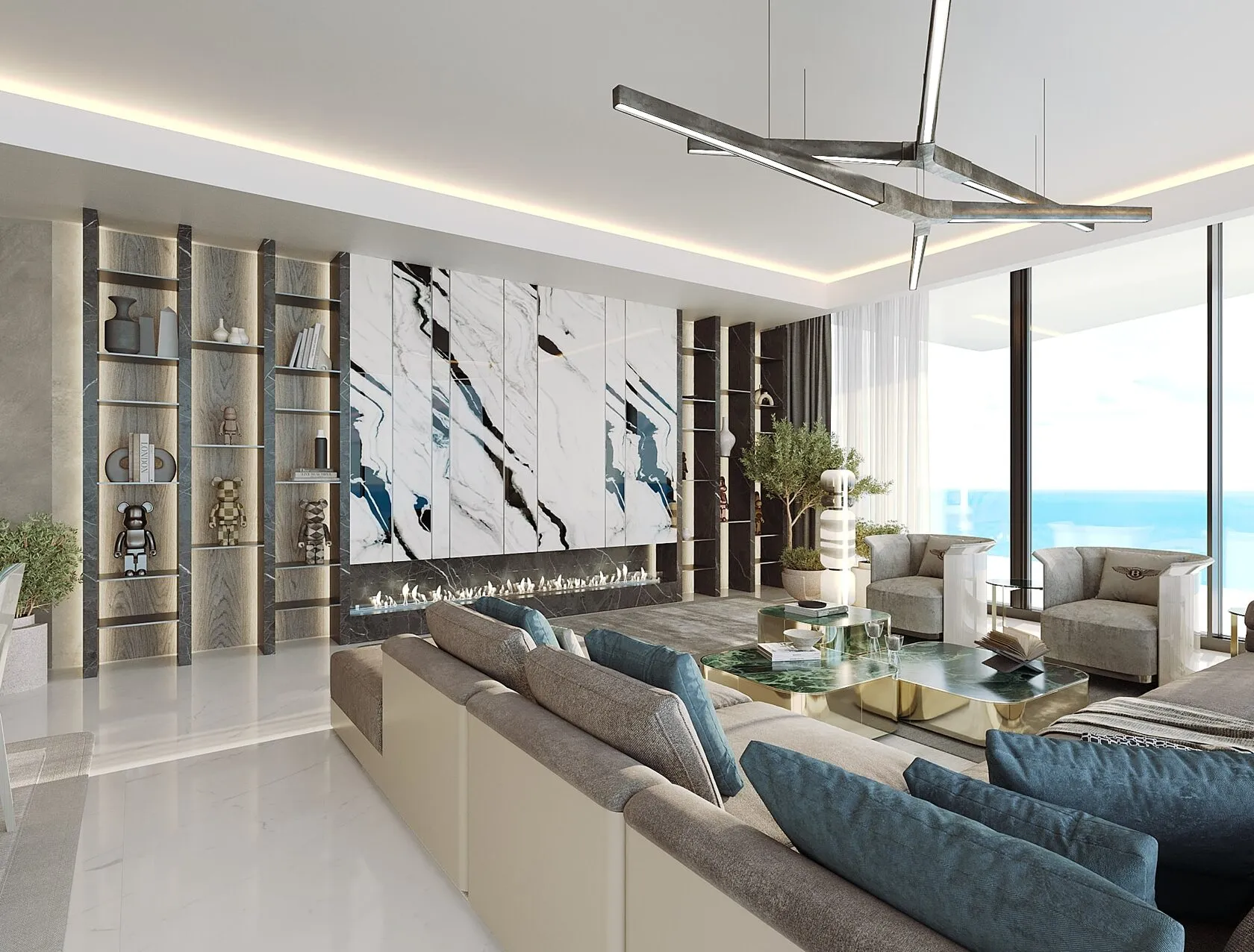
Porcelain tile is the most forgiving floor in South Florida. It doesn’t absorb water, doesn’t fade and doesn’t care about salt. Large-format slabs now imitate marble and terrazzo convincingly, which is why so many oceanfront towers use them. In our Acqualina project the developer’s porcelain floors stayed in place, and natural stone went where it could be seen and touched: a living-room wall of shelving and a fireplace clad in Panda marble, cut into strips of varying widths.
Microcement is the other surface I trust in wet rooms. It forms one seamless finish with no grout lines, it is easy to clean, and a moisture-resistant system copes well with swings in humidity. We chose it for the bathroom of TIPI, our compact glamping retreat in Colorado, where the cabin has to handle sharp changes in temperature and humidity; the project received a Silver award at the 2025 International Design Awards. We also used microcement in the Miami Beach Villa, alongside limestone and hand-applied plaster.
Engineered hardwood is the right way to bring wood underfoot. A thin layer of real wood sits on a cross-laminated core that moves far less than a solid plank. Leave an expansion gap at the walls and acclimatize the boards in the apartment, with the AC running, before installation.
Marble is beautiful and demanding. Acids such as lemon, wine and vinegar etch it, leaving a dull mark. A penetrating sealer helps against stains but does nothing against etching, according to the Natural Stone Institute. For kitchens and bars, I prefer a honed finish, where etches are harder to see, or a quartzite that resists acids better.
Natural stone outdoors needs a different choice again. On a balcony, a polished stone can become slippery and salt can crystallize in porous stone. A textured porcelain paver is the safer choice there.
How common materials handle humidity, salt and sun
A quick reference for an oceanfront home. “Good” means it can be used without special precautions; “care” means it works with the right specification and maintenance.
| Material | Humidity | Salt air | UV / sun | Maintenance |
|---|---|---|---|---|
| Veneer on marine-grade plywood | Good | Good | Care | Low |
| Solid wood, wide panels | Poor | Good | Care | High |
| MDF, unsealed edges | Poor | Good | Good | Low until it fails |
| Teak | Good | Good | Turns silver | Oil if you want the color |
| Stainless steel 316 | Good | Good | Good | Rinse occasionally |
| Stainless steel 304 | Good | Care | Good | Regular cleaning |
| Unlacquered brass | Care | Darkens | Good | Polish or accept patina |
| PVD-finished hardware | Good | Good | Good | Low |
| Powder-coated aluminum | Good | Good | Good | Low |
| Solution-dyed acrylic fabric | Good | Good | Good | Low |
| Silk, natural velvet | Poor | Care | Poor | High |
| Porcelain tile | Good | Good | Good | Low |
| Engineered hardwood | Care | Good | Care | Medium |
| Marble, polished | Good | Care | Good | High, etches from acids |
Materials to avoid and common mistakes
The mistakes I see most often in Miami homes are not exotic. They are ordinary choices made for a different climate.
- Plated “brass” or “gold” hardware on steel: the plating chips, and the steel underneath rusts.
- Unsealed MDF in a bathroom vanity: one leak, and the base swells beyond repair.
- Wallpaper on an exterior wall: the wall is cooler than the room, moisture condenses behind the paper, and mold grows where you can’t see it. Choose a breathable or vinyl-free product and make sure the wall is dry.
- Solid wood flooring installed straight from the truck: it hasn’t adjusted to the apartment’s humidity and moves after installation.
- Silk curtains in a west-facing living room: they fade and weaken within a few seasons.
- Closed closets with no air movement: leather, shoes and wool mildew in a dark, still space. Louvered doors or a small dehumidifier solve it.
- Turning the AC off when you leave: this one deserves its own section.
Already seeing swollen veneer, rusted hardware or a faded sofa? We can assess what failed and replace it with materials that last here, as part of our renovation and remodeling work.
Keeping it that way: AC, humidity control and maintenance
The best material choice can be undone by the wrong thermostat setting. EPA recommends keeping indoor relative humidity below 60 percent, ideally between 30 and 50 percent, to limit mold (EPA). In a Miami apartment, the air conditioner is the main tool for that.
- Never switch the AC off completely. When an apartment heats up and fills with moist air, mold can start on walls, closets and upholstery. Set a higher temperature instead of turning the system off.
- Add humidity control. A humidistat, or a smart thermostat with a humidity setting, runs the system to remove moisture rather than only to cool. In larger homes, a whole-home dehumidifier on the AC system is worth considering.
- Measure. A small hygrometer in the bedroom closet tells you more than any guess.
- Rinse salt off. Wipe balcony door tracks, outdoor furniture and nearby metal with fresh water every few weeks.
- Rotate and protect. Turn cushions, move the throw on the sunniest chair, and close sheers during the strongest hours of sun.
Living behind floor-to-ceiling glass: UV fading
The view is the reason most people buy on the water, and the glass that frames it is the reason so many interiors fade.
Ordinary window glass blocks most UVB rays but lets UVA through (Skin Cancer Foundation). Most oceanfront towers here use impact-rated glass, which is usually laminated, and a common laminated interlayer screens out more than 99 percent of UV (Eastman, Saflex Clear). That helps, but it doesn’t stop fading. Visible light and heat do much of the damage too: the International Window Film Association attributes about 25 percent of fading to solar heat alone (IWFA).
So the protection has to be layered:
- Window film: a quality UV film blocks more than 99 percent of UV and can also cut heat and glare. Check your building’s rules first, since some associations control what is applied to glass.
- Shades and sheers: motorized shades on a schedule protect the room during the hours of strongest sun without blocking the view in the evening.
- Placement: keep the most light-sensitive pieces, such as silk, aniline leather, works on paper and photographs, out of the direct path of the sun.
- Art: frame valuable works behind UV-filtering glazing, and rotate pieces that hang in bright rooms.
What a high-rise condo changes
An apartment on the 30th floor of a tower in Sunny Isles Beach is a different problem from a house in Coral Gables. Some things are easier, some harder.
What the building gives you. Miami-Dade and Broward sit in Florida’s High-Velocity Hurricane Zone, and windows and doors there must be approved for it. In Miami-Dade, that approval is a Notice of Acceptance issued by the county’s Product Control Section (example NOA, miamidade.gov). Modern towers also have central systems that keep corridors and common areas conditioned, so the apartment starts from a stable envelope.
What the balcony brings. It is the saltiest place in the home, and the sliding door next to it lets that salt inside. I treat the first few feet inside the door like an exterior zone: porcelain rather than wood, PVD or 316 stainless hardware, performance fabric on the nearest chairs.
What the association controls. Many buildings set rules for flooring underlayment, window treatments visible from outside, balcony finishes and the hours when work can happen. These rules affect materials, so I read them before I specify anything. We’ll cover the approval process in detail in a separate article on condo renovations.
The second-home problem. Many owners live in Miami for part of the year. An apartment that stays closed for months is where humidity does its worst work. Before the owner leaves, the AC should be set to a moderate temperature with humidity control on, closet doors left open, and someone in the building asked to check the unit regularly.
If you are planning a renovation in a tower, our condo interior design service starts with a review of the building’s rules, permitted materials and logistics. For a house on the water, the same thinking applies to waterfront villas, with more exposure on every side.
The coastal look without coastal damage
The materials people associate with a beach house are not always the ones that survive near the beach.
- Natural rattan and wicker: lovely indoors, away from the sun. On a balcony they dry out, crack and fade. Resin wicker gives the same texture outside.
- Linen: keep the look with linen-blend or solution-dyed fabrics that imitate its texture, and save pure linen for washable slipcovers and curtains.
- Jute and sisal rugs: they absorb moisture and can grow mildew underneath. A wool or performance-fiber flatweave gives a similar look with far less risk.
- Bleached and whitewashed wood: it works well as veneer and engineered flooring; the risk is the same as for any wood, so the construction matters more than the color.
A home on the water can still have rattan, linen and pale wood. They just have to be the versions our climate allows. For more on how we design homes across Miami, see our residential interior design service.
About the author
Timofei Pivnik is an interior designer and the founder of Timroom, an interior design studio on Miami Beach. He is a member of the American Society of Interior Designers (ASID) and received a Silver award at the 2025 International Design Awards (IDA). He trained in monumental art at the Repin Academy of Arts and received the Gold Medal of the Academy of Arts. Since 2012 he has completed more than 150 interiors in the United States and Russia, including oceanfront residences in Miami and Sunny Isles Beach. More about Timofei
Frequently asked questions
What furniture materials hold up best in Florida humidity?
Veneer on marine-grade plywood, teak, powder-coated aluminum and 316 stainless steel for frames, with solution-dyed acrylic or performance fabric for upholstery. Avoid unsealed MDF, plated steel hardware and wide solid-wood panels near windows and balcony doors.
How do I protect wood furniture in a humid climate?
Keep indoor humidity steady, ideally between 30 and 50 percent, and never switch the AC off completely. Keep wood away from AC vents and direct sun, choose hard catalyzed finishes over oil, and let new pieces adjust to the room before use.
Is marble a good choice for a Miami condo?
Yes, with the right finish and expectations. Marble handles humidity well, but acids etch it and sealers don't prevent that. A honed finish hides etching better; for a busy kitchen, consider quartzite or porcelain.
What fabrics resist mold and sun fading?
Solution-dyed acrylics such as Sunbrella and performance fabrics such as Crypton resist both. Olefin is a good budget option. Silk, natural velvet and aniline leather are the most vulnerable.
What humidity level should I keep in a Florida home when I'm away?
EPA recommends keeping indoor humidity below 60 percent and ideally between 30 and 50 percent. Set the AC to a moderate temperature with humidity control on rather than turning it off, and ask someone to check the apartment regularly.
Does impact glass stop furniture from fading?
It helps. Laminated glass blocks most UV, but visible light and heat still fade fabrics, wood and art. Shades, UV film and careful placement are still needed.
Brass is back in style. Can it work in a Miami oceanfront home?
Yes, if you choose the version on purpose. Unlacquered brass will darken and develop a patina in salt air, which some clients love. If you want it to stay bright, specify PVD-finished brass for hardware and fixtures near the balcony, and keep solid brass for pieces deeper inside the home.